Enterprise ArchitEcture

Found this helpful? Share it with peers.
Introduction
Technology radar has become an essential tool for organizations that need to navigate fast-moving technological change and increasing portfolio complexity. As new technologies emerge and existing ones evolve, making informed decisions about adoption, experimentation, or retirement becomes critical for long-term success.
By visualizing technologies based on their relevance and maturity, a technology radar helps organizations gain transparency into their technology landscape — a key objective of enterprise architecture. It supports structured discussions, reduces uncertainty in decision-making, and enables teams to align technology choices with strategic objectives. This article explains what a technology radar is, how it works, and how it can be used to shape a robust technology strategy.
What is a Technology Radar
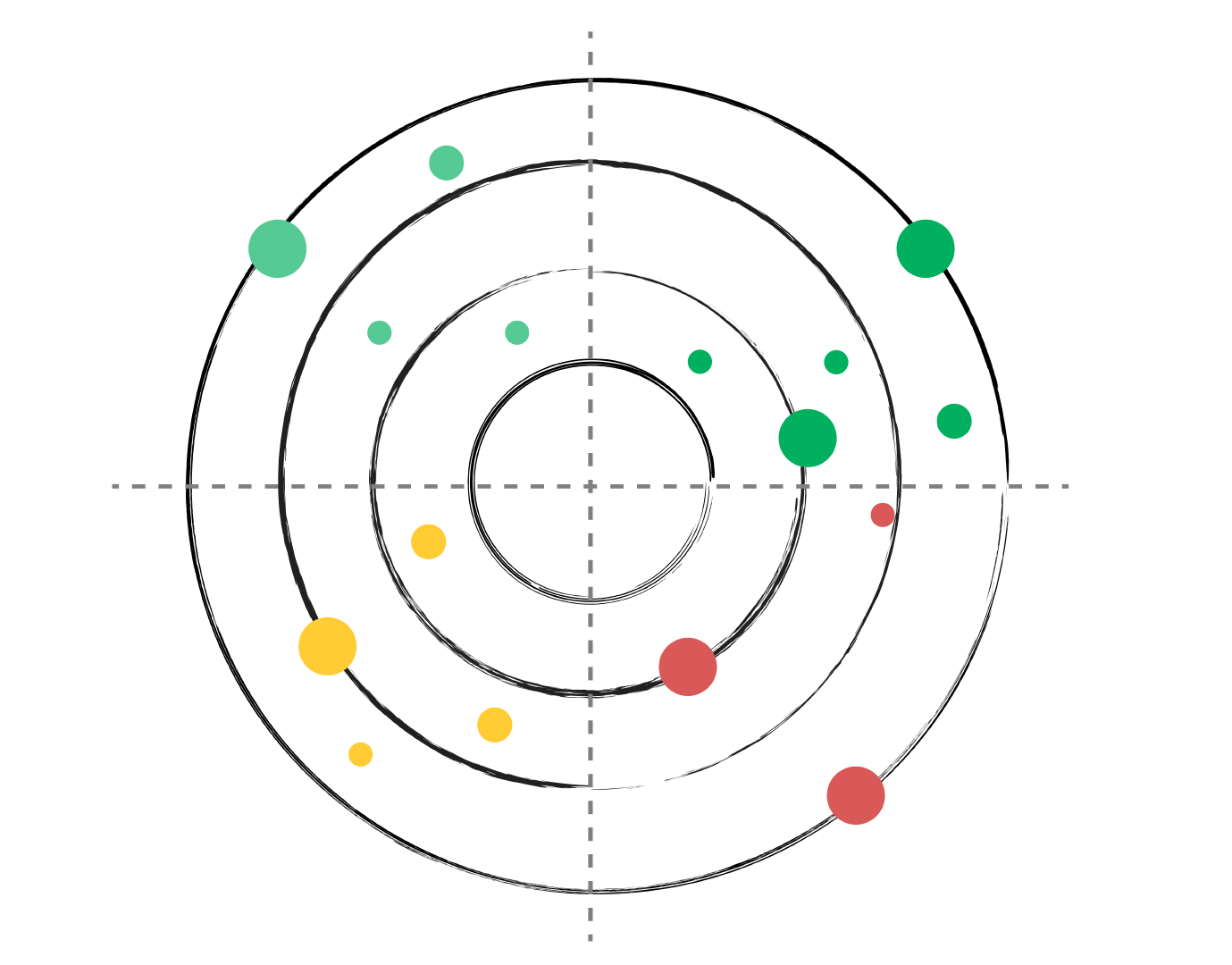
A technology radar is a visualization tool used to assess, categorize, and monitor technologies across an organization’s technology portfolio. It provides a structured overview of existing and emerging technologies, helping teams understand their relevance, maturity, and recommended course of action.
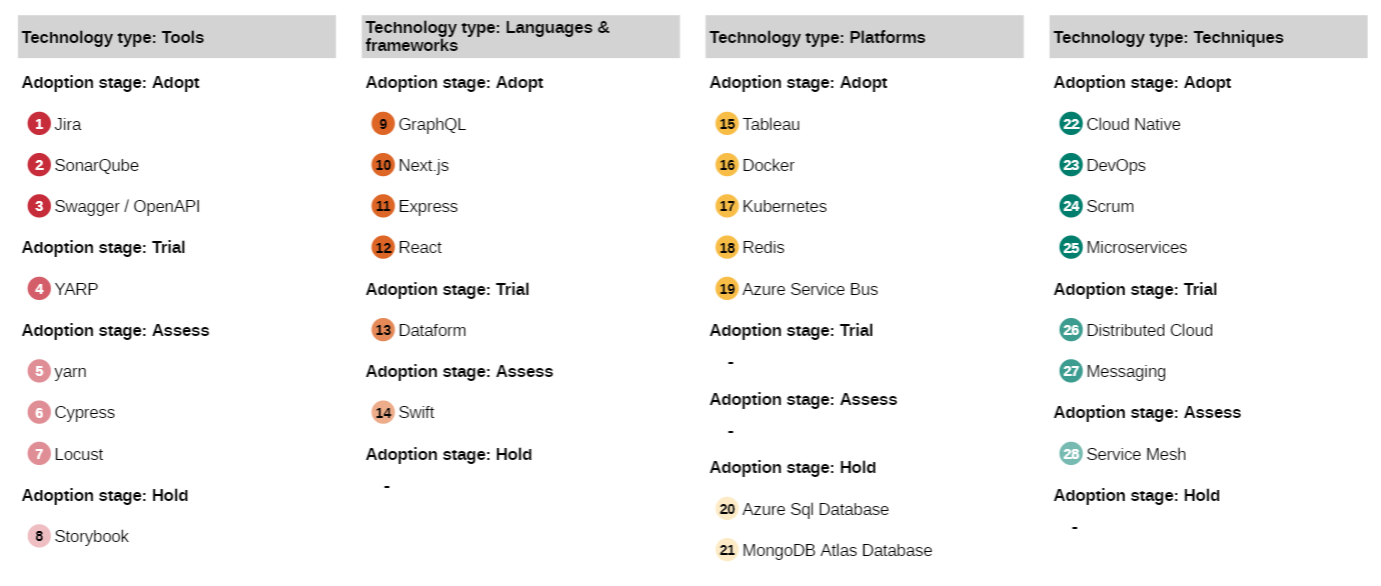
A typical technology radar organizes technologies along two dimensions. Quadrants classify technologies by type, such as tools, platforms, or techniques, while rings represent their adoption stage, for example whether a technology should be adopted, trialed, assessed, or avoided. This visual structure enables organizations to evaluate technology trends, compare options, and make informed, forward-looking decisions.
Technology Radar vs Technology Roadmap
A technology radar and a technology roadmap serve different but complementary purposes. A technology radar focuses on evaluating and monitoring technologies based on their maturity, relevance, and recommended action, helping organizations understand which technologies to adopt, trial, assess, or avoid.
A technology roadmap builds on these insights by outlining when and how selected technologies will be implemented over time. While the radar supports informed evaluation and prioritization, the roadmap translates these insights into concrete timelines and execution plans. Used together, they enable organizations to move from technology assessment to strategic implementation in a structured way.
Why should you have your own Tech Radar?
Having a technology radar helps organizations bring structure and clarity to technology-related decisions. As technology landscapes grow and evolve, it becomes increasingly difficult to assess which technologies are worth investing in, experimenting with, or phasing out. A technology radar provides a shared view that supports consistent and transparent decision-making.
By making the technology portfolio visible and comparable, a technology radar enables cross-functional discussions and reduces uncertainty. It helps organizations identify opportunities early, detect risks in time, and align technology choices with strategic goals rather than short-term trends or isolated preferences.
Who should use a Technology Radar?
A technology radar is valuable for a wide range of roles involved in technology and transformation decisions. It provides a shared reference point that supports collaboration across business and IT.
Typical users of a technology radar include:
-
Enterprise architects, who use it to assess technology trends and dependencies.
-
Technology and IT leaders, who rely on it to guide investment and standardization decisions.
-
Product and delivery teams, who use it to select technologies for new initiatives.
-
Innovation teams, who explore emerging technologies and experimentation opportunities.
-
Business stakeholders, who benefit from improved transparency and alignment around technology choices.
By serving these diverse audiences, the technology radar helps organizations align technology decisions across roles and functions.
Build your own Technology Radar
Building a technology radar starts with selecting the technologies that are truly relevant for your organization’s future, a process closely linked to technology scouting. The focus should be on technologies that support new business models, products, services, or ways of working, rather than attempting to map every existing asset. technology scouting
Once the scope is defined, organizations need to decide which dimensions to visualize. Typically, technologies are grouped by type and categorized by adoption stage. This structure makes it possible to compare technologies consistently and understand where to invest, experiment, observe, or avoid. A well-designed technology radar turns complex technology landscapes into a clear and actionable decision tool.
Technology Radar categories (quadrants)
Technology radar quadrants are used to group technologies based on their type and purpose. This categorization helps organizations compare similar technologies and understand how different areas of the technology landscape evolve over time.
Common technology radar categories include:
Tools
Representing software components used to support specific tasks, such as testing tools or UI development tools.
Languages and Frameworks
Covering programming languages and development frameworks required to build software solutions.
Platforms
Including software or hardware environments that host applications and services, such as operating systems or cloud platforms.
Techniques
Describing methods and approaches used in software development and technology implementation, such as architectural patterns or delivery practices.
By organizing technologies into quadrants, the technology radar creates structure and clarity, making portfolio-level discussions more focused and meaningful.
Technology Radar adoption stages (rings)
Technology radar rings represent the adoption stage of each technology and indicate how organizations should approach it at a given point in time. These stages help decision-makers distinguish between proven technologies and those that still require evaluation or caution.
Common adoption stages in a technology radar include:
-
Adopt, technologies that are mature, well understood, and recommended for use in new initiatives.
-
Trial, technologies that have shown promise in real-world scenarios but still involve a higher level of risk.
-
Assess, technologies that are under evaluation and require further analysis before being used.
-
Hold, technologies that should not be used for new projects due to known limitations or risks.
By assigning technologies to these stages, the technology radar provides clear guidance on where to invest, experiment, observe, or avoid.
Keeping your Technology Radar up to date
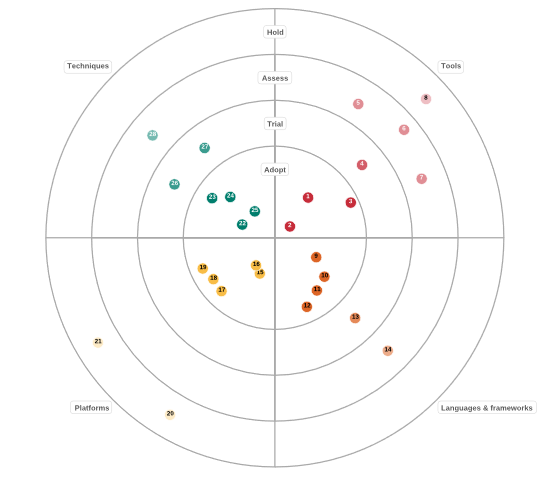
A technology radar only delivers long-term value if it reflects the current state of the technology landscape. Treating it as a one-time exercise quickly reduces its usefulness, as technologies evolve, mature, or become obsolete over time.
By regularly reviewing and updating the radar — a process closely tied to technology lifecycle management — organizations ensure that technology assessments remain relevant and aligned with strategic priorities. Continuous updates help teams track changes in adoption, reassess risks, and adjust investment decisions. As a living artifact, the technology radar becomes a reliable reference point for ongoing technology governance and strategic planning.
Dig deeper with ArchiMate
In order to enable your enterprise architects to describe, analyse and visualize different architectural artifacts effectively (as well as their dependencies to other elements), we recommend leveraging the worldwide standard modelling language – ArchiMate.
Analyzing technology dependencies with enterprise architecture
To fully understand the impact of technology decisions, organizations need visibility into how technologies relate to business processes, applications, and capabilities. Enterprise architecture modeling provides the structure required to analyze these dependencies consistently.
By using a standardized modeling approach such as ArchiMate, enterprise architects can extend the technology radar with deeper insights, including:
-
Business processes and applications that rely on a specific technology
-
Capabilities realized through the technology
-
Project roadmaps affecting its evolution
-
Risk assessments and lifecycle considerations
-
Investment strategies and responsibilities
This extended analysis helps organizations grasp dependencies across the enterprise portfolio and make more informed, future-proof technology decisions.
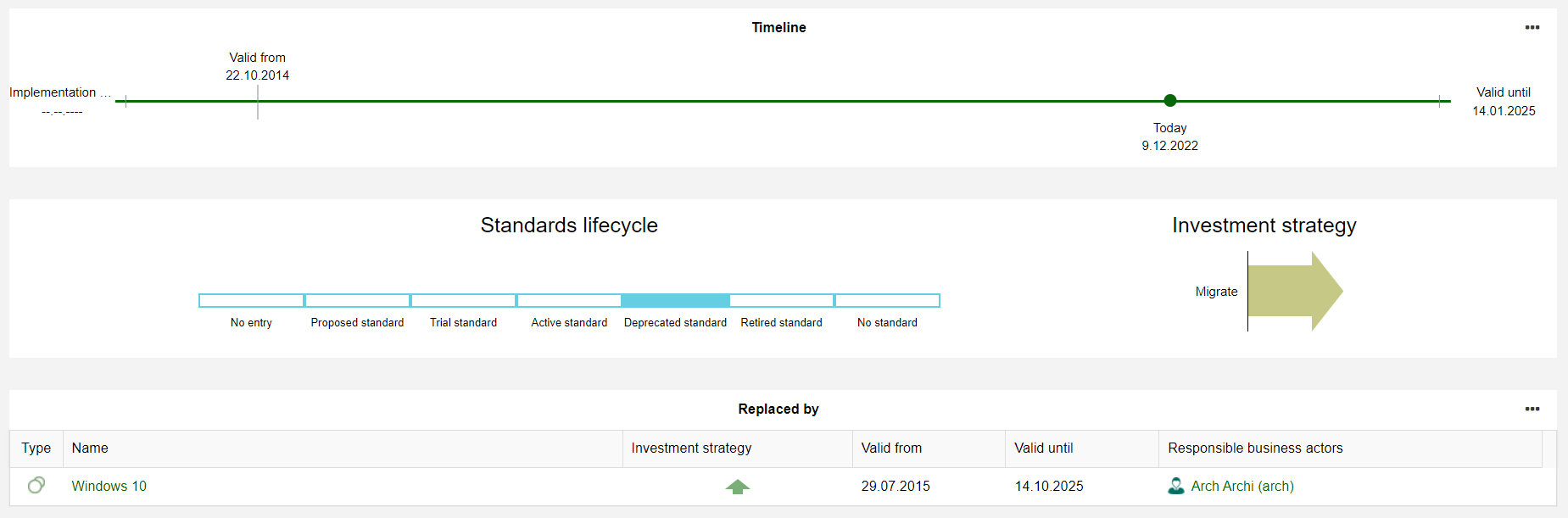
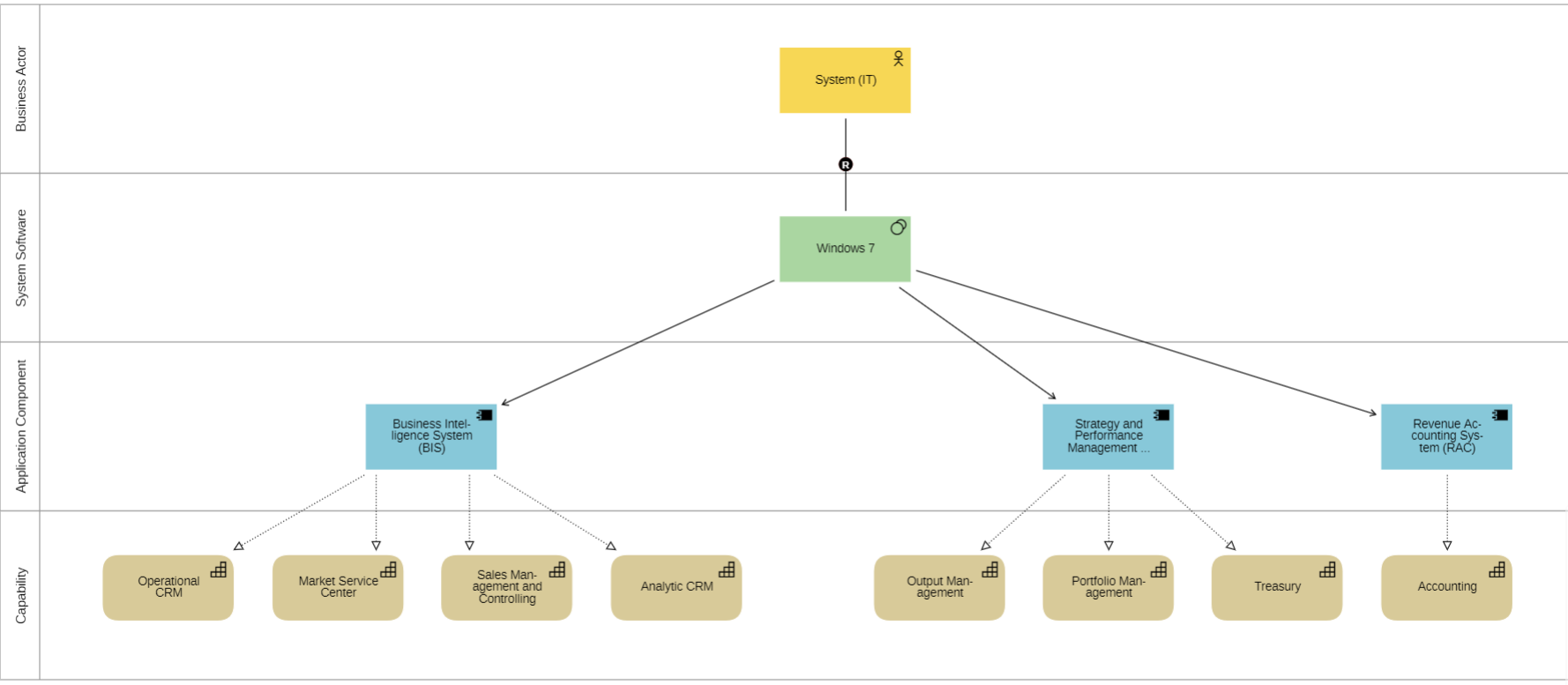
Example of technology dependency analysis in EA tool ADOIT
With ArchiMate, you have the possibility to go even further in your technology exploration, relying on information such as:
- Business process and applications that use a particular technology
- Capabilities that are being realized through a technology
- The project roadmap affecting the technology
- Risk assessments
- Lifecycle information and investment strategy
- Responsibilities
- And more
Grasp the full extent of dependencies across your enterprise portfolio and define your future-proof architecture blueprint accordingly!
Summary
A technology radar helps organizations evaluate and monitor technologies in a structured and transparent way. By visualizing technologies based on their type and adoption stage, it enables informed decisions about which technologies to adopt, trial, assess, or avoid.
Used as a living artifact, the technology radar supports ongoing technology governance and strategic planning. It also provides a valuable foundation for technology roadmapping, helping organizations translate technology evaluation into concrete planning and implementation steps.
When combined with enterprise architecture practices, it provides deeper insight into technology dependencies and helps organizations align technology choices with long-term business objectives and change initiatives — all of which the ADOIT EA tool is built to support.





Already got our weekly updates?