Enterprise ArchitEcture

Found this helpful? Share it with peers.
Introduction
When teams plan for transformation, one question often comes up early: capability roadmap vs goal roadmap — which one should we use? Both approaches help connect strategy to execution, but they guide planning in very different ways.
A goal roadmap focuses on what the organization wants to achieve and when. It lays out strategic objectives and milestones, giving direction and alignment from the top down.
A capability roadmap, on the other hand, focuses on what the organization needs to be able to do to reach those goals. It prioritizes capability maturity, development, and sequencing—turning ambition into the skills, processes, and capacities required to deliver.
Without choosing the right roadmap, organisations risk unclear priorities, misaligned efforts, and stalled execution. With the right one, or a combination of both, strategy becomes actionable, resources are focused where they matter most, and teams move forward with clarity.
In this guide, you’ll learn the difference between capability and goal roadmaps, when to use each, and how they work together to drive successful transformation.
What is a Goals Roadmap?
A goal roadmap is a strategic plan that outlines what an organization wants to achieve and when. Instead of jumping straight into projects or capabilities, it focuses first on the outcomes the business is aiming for—such as improving customer satisfaction, increasing market share, or reducing operational costs.
A goal roadmap helps teams:
-
Define clear strategic objectives
-
Sequence milestones over time
-
Align leadership and stakeholders around priorities
-
Maintain focus on desired outcomes rather than isolated initiatives
In other words, a goal roadmap turns high-level ambition into a structured timeline. It provides a top-down view that answers the question:
“Where are we trying to go?”
It doesn’t yet prescribe how the organization will achieve these goals—that’s where capability roadmaps come in. Instead, it ensures everyone understands the destination before deciding on the path.
Hint: Discover 5 key steps to creating your own Goal-based Roadmap.
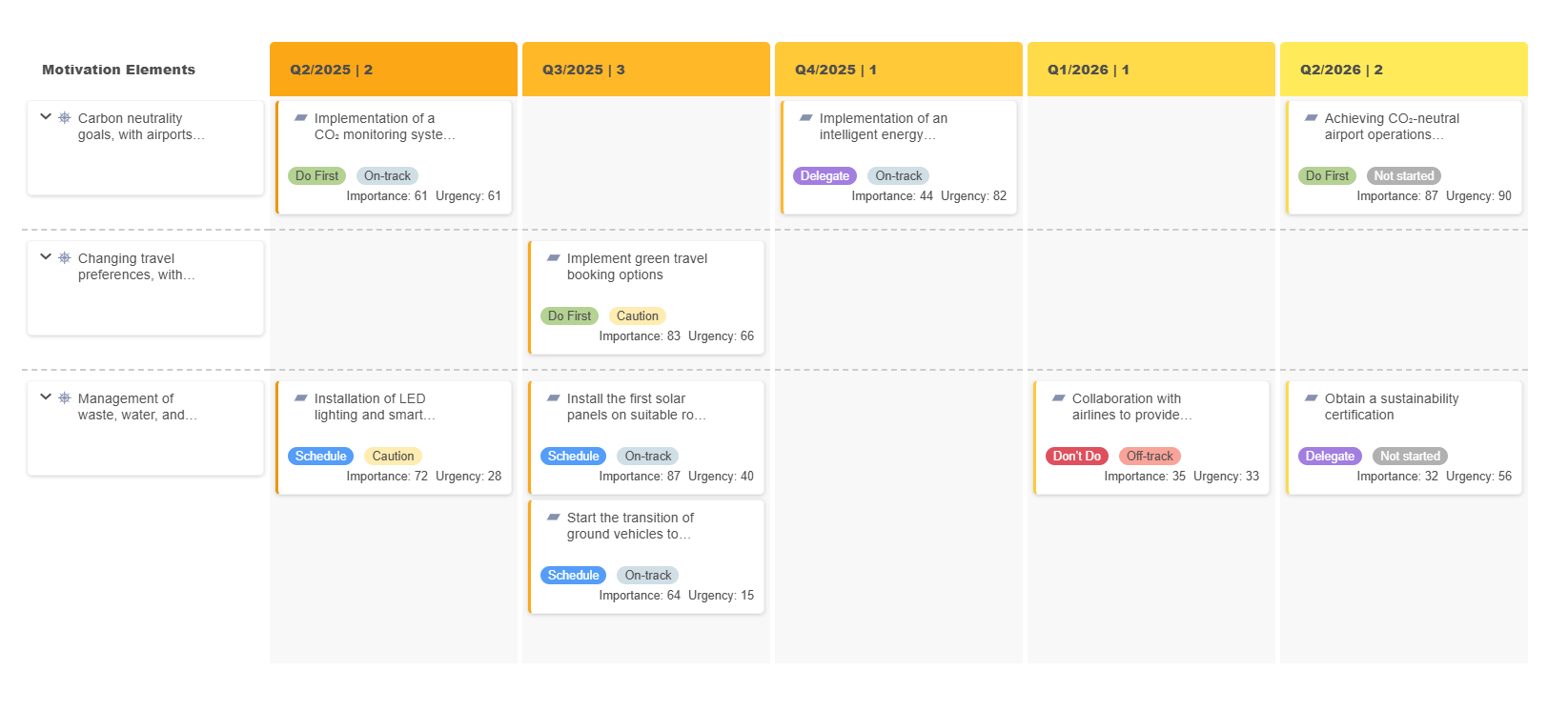
Example of a Goal Roadmap in ADOIT
What is a Capability Roadmap?
Most people have a general idea of what their organization is aiming for. They also tend to know where their strengths lie. Still, that does not always mean they know how to put those strengths to use. Timing and structure are often missing. Without a clear plan, even the most valuable capabilities can sit idle or be used the wrong way.
A capability roadmap gives that missing structure. It helps you figure out which capabilities matter most for the goals you want to reach. You can also use it to think through how those capabilities should grow over time. On top of that, it makes it easier to sort out what is needed for each capability to work in practice. That way, you can plan the work in a way that makes sense and focus on the right things at the right time.
Hint: Discover 5 key steps to creating your own Capability-based Roadmap.
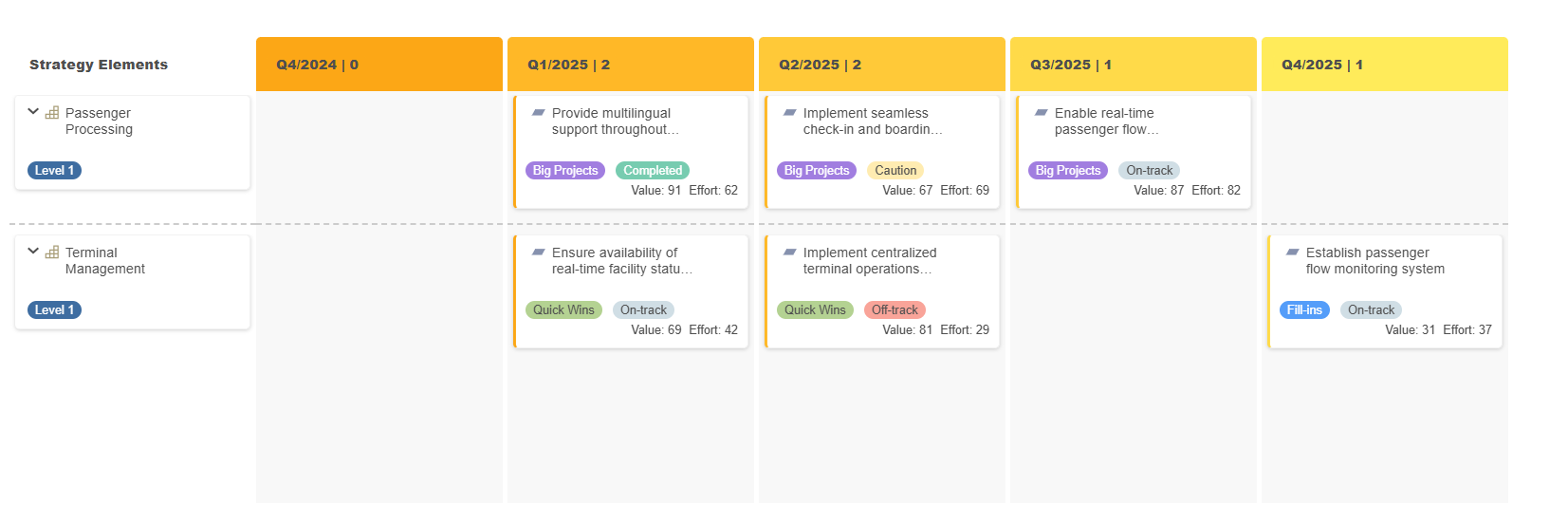
Example of a Capability Roadmap in ADOIT
Key Differences Between Capability and Goals Roadmaps
Although both roadmaps support transformation, they answer different questions and operate at different levels.
A Goal Roadmap sets the destination — the outcomes the organization wants to achieve and when. It’s directional and time-bound, helping leaders align around priorities, milestones, and strategic intent.
A Capability Roadmap, on the other hand, defines the engine that makes those outcomes possible. It focuses on the capabilities the organization must build, enhance, or retire, as well as the sequence in which they should mature.
In simple terms:
A Goal Roadmap tells you where you’re going
A Capability Roadmap tells you what you must be able to do to get there
When combined, they connect strategy with execution — turning ambition into real, scalable progress.
When to Use a Goals Roadmap vs. a Capability Roadmap
Both roadmap types are valuable — but they shine in different moments of the transformation journey.
When to Use a Goal Roadmap
Use a Goal Roadmap when you need to:
-
Define or reset strategic direction
-
Align leadership and stakeholders around shared priorities
-
Set measurable outcomes and timelines
-
Communicate the “big picture” across the organisation
-
Sequence major initiatives at a high level
It’s ideal at the start of planning, when clarity, focus, and alignment matter most. The goal roadmap gives everyone a single destination — before decisions get tactical or fragmented.
Put simply: Use a Goal Roadmap when you need agreement on what success looks like.
When to Use a Capability Roadmap
Use a Capability Roadmap when it’s time to:
-
Translate strategy into execution
-
Identify capability gaps holding the business back
-
Prioritise what needs to mature first
-
Define requirements and enablers (processes, data, applications, skills)
-
Plan realistic, sequenced delivery work
It’s most valuable after goals are defined, when the organisation needs to understand how to deliver them.
Put simply: Use a Capability Roadmap when you need to clarify what must be built or strengthened to reach the goal.
Why Enterprise Architects Should Combine Both Approaches
Using just one roadmap gives you only part of the picture. A Goal Roadmap sets the vision, but doesn’t tell you how to deliver it. A Capability Roadmap structures execution, but without a clear strategic destination, it risks becoming activity without impact.
When combined, they create a closed loop between strategy and execution:
The Goal Roadmap defines the outcomes
The Capability Roadmap defines the enablers
Together, they ensure every action supports the strategy
This integrated approach helps enterprise architects:
-
Connect the “why” to the “how”
-
Prevent misaligned investments
-
Avoid capability gaps that stall progress
-
Sequence transformation realistically
-
Track progress in both outcomes and maturity
-
Strengthen collaboration between business & IT
When both roadmaps are used together, transformation becomes measurable, prioritized, and grounded in reality — not assumptions.
How ADOIT supports Capability and Goals Roadmapping
When choosing between a goal roadmap or a capability roadmap, the real win comes from executing both. ADOIT makes that possible.
ADOIT Puts Goals and Capabilities in One Place
No more slides, spreadsheets, or scattered documents. Everything lives in a single workspace so plans stay aligned and visible.
Build Roadmaps in Minutes, Not Weeks
ADOIT guides you step-by-step, so anyone can create a roadmap, even without EA expertise. You get structure instantly, instead of starting from scratch.
Link Strategy to Action Automatically
Goals connect directly to the capabilities and requirements needed to achieve them. No gaps. No guesswork. No wasted effort.
Everyone Stays Aligned and Involved
Business, IT, and architecture teams collaborate in real time. No version chaos, no silos, no outdated plans.
Your Roadmaps Stay Alive
As priorities change, ADOIT updates your roadmap instantly. You always work with the latest plan, not last month’s slide deck.
Faster Decisions, Faster Delivery
With clarity on what matters and what enables it, teams move with confidence and momentum.
Summary
Choosing between a goal roadmap and a capability roadmap isn’t really about picking one over the other — it’s about making sure strategy and execution stay tightly connected. Goals define where you’re going. Capabilities define what you need to get there. When they’re aligned, transformation stops being theoretical and becomes measurable, actionable progress.
And that’s exactly where ADOIT elevates the entire process. It gives you clarity, structure, and visibility, so plans don’t just look good, they actually move forward.
Clear direction. Real enablement. Faster results.
If you’re ready to turn strategy into execution with confidence, it’s the right time to take the next step.




Already got our weekly updates?