BUSINESS PROCESS MANAGEMENT
Found this helpful? Share it with peers.
With ADONIS, Primeo Energie is turning a complex process landscape into a transparent, scalable process architecture. Clear process levels, process maps, and detailed process descriptions make it easier to navigate and show how workflows, roles, and responsibilities relate to one another. This story shows how process management, in a highly diverse organization, becomes a foundation for quality, continuous improvement, and future digitalization.
Starting Point: Complexity in a Dynamic Energy Sector
Primeo Energie is a Swiss energy company headquartered in Münchenstein. The company supplies customers in Switzerland and France with energy and operates across energy trading, grid, heating, and renewable energy. This environment combines operational diversity, regulatory requirements, and the need to deliver energy reliably, now and in the future.
This diversity also shapes how the company manages its processes. Primeo Energie works across multiple entities, business areas, and cross-border structures, along with different operational realities, management systems, and languages. Quality and process management provides the common framework that connects all of this.
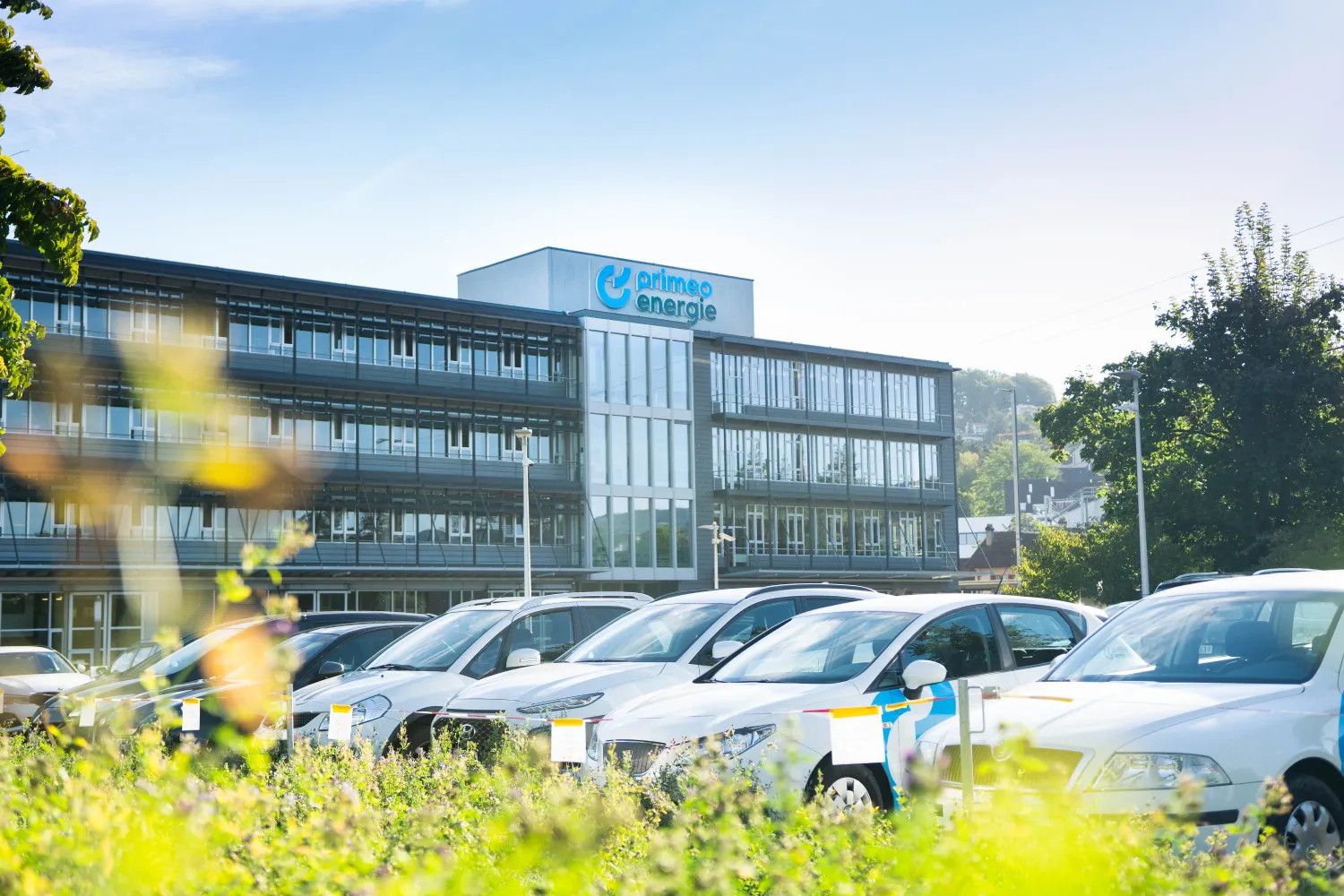
Primeo Energie headquarters, Münchenstein
ADONIS has been in use at Primeo Energie for many years, so this is not a story about introducing a BPM solution for the first time. The main task was to further develop an already established process landscape and make it easier to use and manage. Several hundred processes needed to be structured so they are aligned across departments, clearly documented, and easy to find.
Primeo Energie wanted to organize its existing processes so that employees, process owners, and management could all keep track. Process management was meant to do more than describe what happens. It was also meant to provide guidance and support quality, continuous improvement, and future digitalization.
From Documented Processes to Real Clarity
Primeo Energie’s goal is a transparent, scalable process architecture. The company had already documented several hundred processes, but these were spread across different levels, entities, and topics, which limited their practical use. Employees needed a quick, logical path from the overall picture to the process they actually needed, rather than a set of disconnected levels.
The focus was on everyday use. Process information had to be easy to find and easy to understand, and the process landscape needed to provide guidance without adding further complexity.

Thomas Persson
Head of Quality Management and Systems, Primeo Energie
At the same time, Primeo Energie needed to bring together requirements from several management systems. Quality management, occupational safety, environmental management, risk management, and information security all needed to be visible and applicable within the process context. The challenge was not simply documenting processes, but structuring them so they would work for different roles, entities, and management systems alike.
The Solution: A Structured Process Architecture with ADONIS
Primeo Energie uses ADONIS as its central platform to model, structure, and make processes accessible through process maps. ADONIS is not an end in itself; the platform is what creates the basis for clarity, transparency, and a shared understanding of processes.
“ADONIS is our central point of contact for processes. Employees quickly find the information they need, and at the same time understand how their process fits into the bigger picture,” says Thomas Persson.

The Process Pyramid: Five Levels
Primeo Energie structures its process architecture around a five-level pyramid.
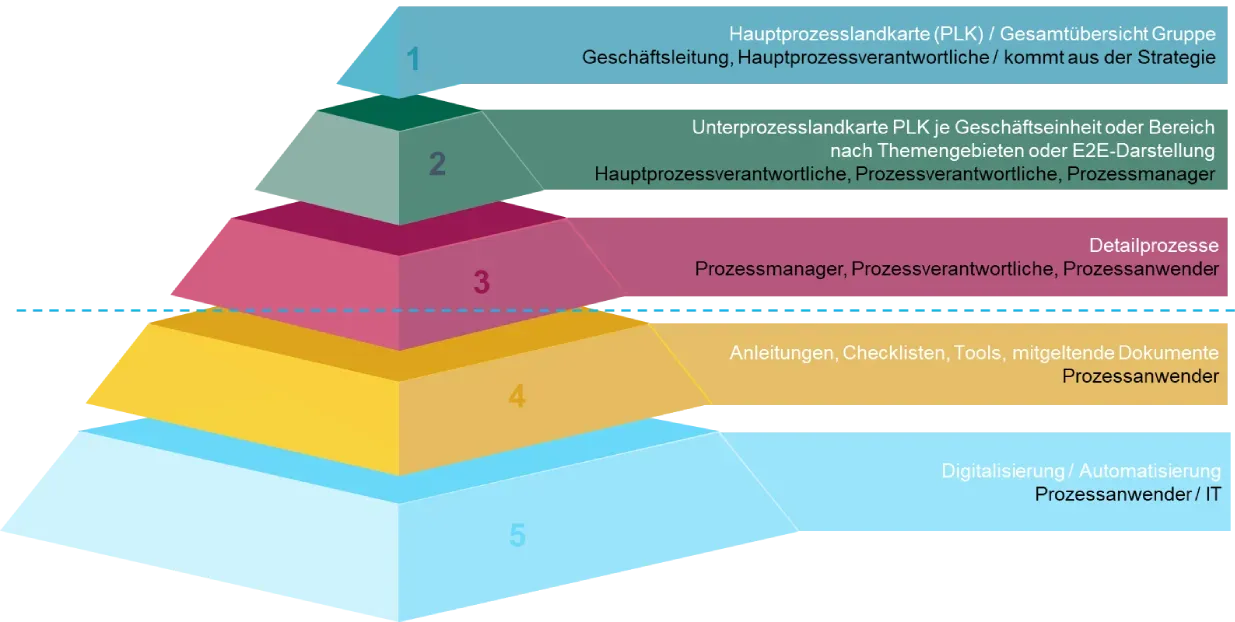
Primeo Energie’s process pyramid
At the top is the group’s main process map. Below that are sub-process maps for individual entities, business areas, or topics. The next level describes processes in detail, along with related documents, tools, and checklists. The fifth level prepares the ground for digitalization and automation, and becomes relevant once a process is well understood and it is clear which steps can be digitally supported or automated.
One Process Map, Not Separate Silos
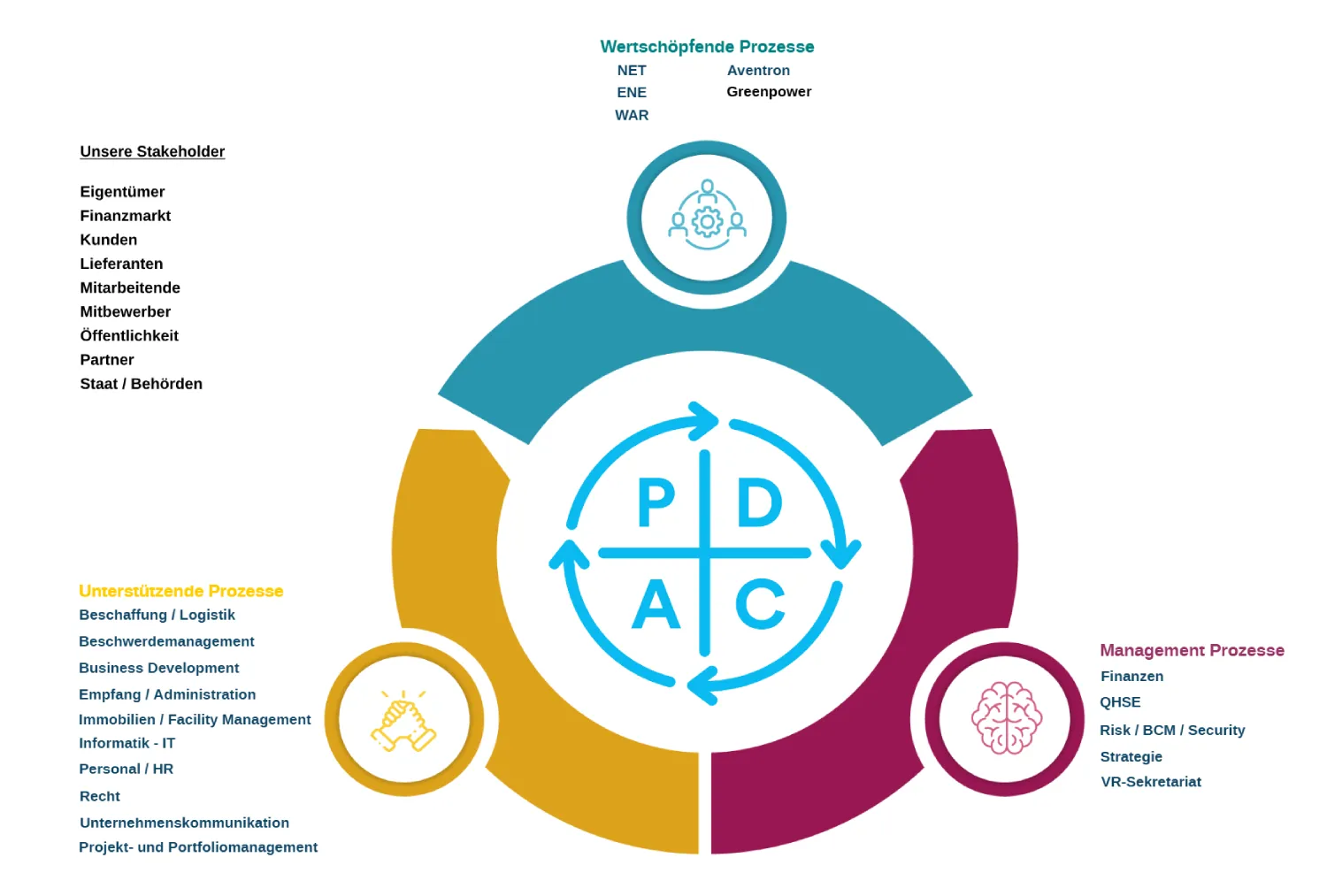
Primeo Energie’s main process map
The main process map plays a central role. Instead of the traditional structure, with separate lanes for management, core, and support processes, Primeo Energie built its map to show the process landscape as one connected system. Value-creating processes are at the center, while supporting and management processes provide the framework that stabilizes them.
“If a supporting area falls away, the whole system becomes unstable. All three areas are needed for value creation to work,” says Thomas Persson.
The PDCA cycle reflects process management as part of continuous improvement.
This is where the process map delivers its main value: it creates clarity and shows how everything connects. Employees and management can see which types of processes depend on each other and why every part of the system matters. This makes the process architecture easier to understand and easier to connect with quality management, risk management, information security, and other management systems.
Method and Responsibility
Primeo Energie uses BPMN 2.0 as its modeling standard, which supports a consistent, easy-to-read visual style. At the same time, the company is careful not to overcomplicate the modeling itself, since the process landscape needs to stay readable in daily use. Information is presented in a way that makes sense to people in their day-to-day work, not just to specialists.
Organizationally, Primeo Energie combines central subject-matter leadership with local input. Quality and process management sets the framework and supports the various departments, while individual employees within entities or business areas model directly in the system. The central team reviews and implements any further changes. Internal training and e-learning further support understanding of quality and process management, as well as roles and modeling practices.
The Result: Clarity for Every Audience
The biggest win for Primeo Energie is simple: people can finally see how everything fits together. A process landscape that once felt scattered now has real structure, one that works for whoever needs it, whether that’s someone on the shop floor or someone in the C-suite. Processes are no longer isolated items sitting side by side. They’re part of a connected picture that makes it obvious how workflows, roles, documents, and management systems relate to each other.
That shows up differently depending on who’s looking:
- Employees can quickly find their way to the process they actually need, instead of hunting through disconnected pages.
- Process owners have a solid basis for maintaining processes, developing them further, and keeping them aligned with the relevant departments.
- Management can see exactly how value-creating, supporting, and management processes work together.
- Quality management can tie requirements from multiple management systems directly into the process context, instead of managing them separately.
Most of this value is qualitative: transparency, structure, and a shared frame of reference. But it also sets Primeo Energie up for what comes next, since digitalization and automation only work once processes are properly understood and clearly described.
As Thomas Persson puts it: “ADONIS gives me an overview that I can present clearly and read easily.“
Looking Ahead: Continuous Development as a Success Factor
Primeo Energie doesn’t see process management as a one-off project. It’s a continuous improvement effort, and the process architecture keeps growing along with it. The near-term priority is bringing in additional entities in Switzerland and units in France, which raises the stakes for the structure itself: it needs to work group-wide while still making room for local differences.
The management system is developing too. Risk management is already built in and keeps getting refined, information security is being anchored more firmly within the system, and business continuity stays tightly linked to operational processes, risk, and the other management systems around it. The real challenge is bringing all of this together without piling unnecessary complexity onto the process landscape.
The next step sits at the fifth level of the process pyramid: digitalization and automation. The aim is to document processes thoroughly enough that the documentation itself becomes the basis for digitalizing and automating them.
One thing is clear: process management has to stay flexible. Processes, organizations, and requirements all shift over time, which is exactly why having clear structures, and staying willing to keep developing them, matters so much.
“This isn’t something that’s ever really finished,” Thomas Persson says.
Summary
Primeo Energie’s experience holds a lesson for any company facing similar complexity: a process landscape doesn’t become usable just because more of it gets documented. What matters is an architecture that’s clear and well-connected, one that gives people orientation, makes responsibilities visible, and makes relevant information easy to reach. That’s what turns process management into a real foundation for quality, transparency, and continued growth.