BUSINESS PROCESS MANAGEMENT
Found this helpful? Share it with peers.
Parallel production, interconnected workflows, and growing coordination needs are now part of everyday media operations. At SRF, content is developed simultaneously for multiple platforms, adapted for different audiences, and delivered across channels. This shift increased dependencies between editorial, production, distribution, and technology teams.
As part of the SRF 2024 transformation program, SRF introduced an enterprise-wide process and organizational model to create transparency across workflows and strengthen collaboration. Jonas Bendel, Head of Organization & Processes at SRF, explains how the organization built a shared view of value creation and established a foundation for further transformation.
The Networked Reality of Media Production
Media consumption has shifted fundamentally in recent years. Audiences expect content to be available at any time, across channels and devices. Live or on demand. TV, social media, web, or app. For media organizations, this changes how content is created and delivered.
At SRF, content is no longer developed for a single format. It is conceived from the beginning for multiple platforms and audiences. Editorial teams, production, distribution, and technology work in parallel, with strong dependencies between them.
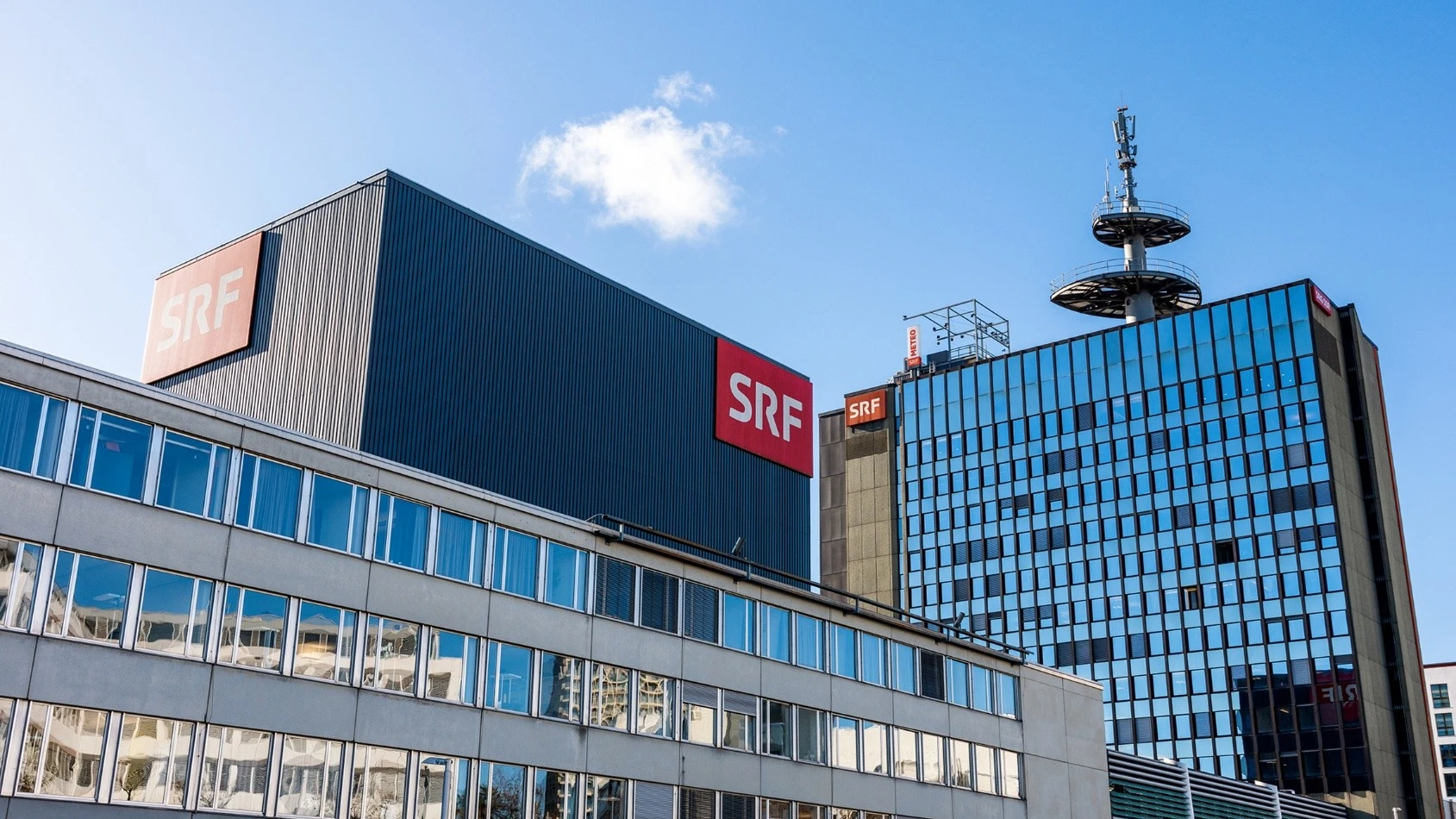
Image: © Swiss Radio and Television (SRF)
“Many steps happen in parallel. While a piece is still in production, the next steps are already underway,” says Jonas Bendel, Head of Organization & Processes at SRF.
Social media formats are developed alongside broadcast content, and teams continuously adapt material for different audiences. Editorial, production, distribution, and technology functions must coordinate closely. Decisions in one area quickly affect others. Dependencies multiply, and clarity can be difficult to maintain.
Three Building Blocks for Change
SRF approached the challenge with a new way of thinking about organization and collaboration.
Value Creation as the Guiding Principle
Historically, SRF placed editorial content at the center of its value creation logic. In the new operating model, distribution, production, technology, and audience perspectives are considered equally. Different professional viewpoints now inform content development from the very beginning — from the initial idea through production to how the content reaches its audience. This shifts the perspective from a primarily editorial view to a holistic view of the offering from the start.
To systematically support collaboration, SRF took a fundamental step: the organization would no longer be defined primarily by structure, but by shared workflows. Value creation became the starting point, viewed end-to-end across departmental boundaries.
In a broad, collaborative process, around 100 employees from different areas worked together to describe media production and distribution as a connected workflow. They addressed questions such as: How is content created within the company? Which tasks intersect? Which roles are involved throughout the process? The outcome was a shared view of core workflows, which now frames SRF’s processes, collaboration, and organizational structure.
Process Thinking as Daily Guidance
Building on this new value creation perspective, SRF developed a comprehensive process map, describing roughly 300 processes across the value chain.
“It wasn’t about creating a strict sequence of steps, but more about alignment: What is possible? Who is responsible? How do we work together?” emphasizes Jonas Bendel.
The goal was to support creative work through clear guidance, creating a framework that balances structure with flexibility:
- Which tasks belong to which process?
- Who is involved?
- Where are the interfaces between different areas?
A Digital Organizational Model
To make this information accessible, SRF built structured Business Process Management with ADONIS. Processes, roles, systems, and organizational units were systematically linked and captured in a central model.
“Our goal was to create a digital representation of SRF. This gives everyone clarity and transparency about how the organization functions,” explains Bendel.
Standardizing roles was a key part of the effort. Over time, many different job titles had emerged. Together with HR, these were consolidated into a consistent role catalog, reducing around 2,700 job titles to roughly 350 clearly defined roles. This clarity allows responsibilities along processes to be assigned unambiguously.

Results and Impact
Centralized, actively used Process Portal
Today, all SRF employees have access to the organizational portal, which consolidates processes, strategies, roles, org charts, and terminology in one place. New colleagues can quickly understand how their role connects with others in the company.
The portal doesn’t just provide alignment and coordination. It also supports process development. Teams actively use the models and consult the central organization and process team when refining workflows.
Shared language, better collaboration
Implementing the process and organizational model had one main effect: greater transparency over workflows, roles, and responsibilities. For the first time, SRF had an organization-wide foundation for collaboration.

Jonas Bendel
Head of Organization &
Processes at SRF
Workshops and projects consistently show the effect of this new transparency. One manager reflected after working with the models: “Now I finally understand what others meant.” Redundancies became visible, and synergies could be used deliberately.
Managing change and supporting decisions
The digital organizational model provides a foundation that goes far beyond traditional process documentation. It not only helps understand existing workflows but is increasingly used to plan changes and support decision-making.
“Process management shouldn’t just document. It should create the foundation for shaping the next changes,” says Jonas Bendel.
Looking Ahead: A Foundation for the Next Transformation
For SRF, the process and organizational model is not a completed project. On the contrary, it provides the foundation for the next steps in development. Upcoming priorities include closer integration of processes with key performance indicators and supporting digital initiatives such as automation and AI.
Clearly defined processes, consistent roles, and transparent connections form the basis for using these technologies effectively across the organization.
“Fewer models, but in high quality,” states Bendel.
Summary
Through the SRF 2024 transformation program, SRF has aligned its organization around cross-platform digital offerings. At the heart of this effort is an enterprise-wide process and organizational model that maps end-to-end value creation, uncovers interdependencies, and improves productivity in collaboration.
The digital organizational model is far more than documentation. Teams increasingly use it to refine processes and proactively drive improvements.
At the same time, it provides a solid foundation for better-informed decisions and structured change management. This gives SRF a reliable base for the next development steps — from linking processes to KPIs to initiatives around automation and AI.