BUSINESS PROCESS MANAGEMENT

Found this helpful? Share it with peers.
Introduction
Operational Excellence is not a one-time initiative, but a continuous effort to improve how an organization operates. It focuses on delivering consistent value by optimizing processes, reducing inefficiencies, and enabling sustainable performance improvements.
Business Process Management (BPM) plays a central role in achieving Operational Excellence. By providing structure, transparency, and measurable insights into how work is performed, BPM enables organizations to systematically improve processes and translate strategic goals into operational results. This article explains how Operational Excellence can be implemented effectively using BPM as a core enabler.
What Is Operational Excellence in the Context of BPM?
Operational Excellence is a well-established concept focused on continuously improving how organizations operate. This article does not redefine OpEx. Instead, it explains how Operational Excellence can be implemented in practice using Business Process Management (BPM).For a detailed explanation of Operational Excellence principles and methodologies, see our guide on What is Operational Excellence?
A Step-by-Step Approach to Operational Excellence with BPM
Achieving Operational Excellence with BPM requires a structured and iterative approach. Rather than treating improvement as a one-off initiative, BPM enables organizations to build a repeatable cycle of analysis, optimization, and control.
The following steps outline how BPM supports the systematic implementation of Operational Excellence across the organization.
1. Define Objectives and Align with Strategy
Operational Excellence initiatives must start with clearly defined objectives that align with the organization’s strategic goals. BPM helps translate strategic intent into concrete process-related targets, such as efficiency, quality, compliance, or customer satisfaction. Clear objectives provide direction for process analysis and ensure that improvement efforts focus on what matters most to the organization.
2. Establish a Culture of Continuous Improvement
Operational Excellence is sustained through a culture that encourages continuous improvement. BPM supports this by making processes transparent and providing a common language for discussing improvements. When employees understand how processes work and how their actions contribute to performance, they are more likely to participate actively in optimization initiatives.
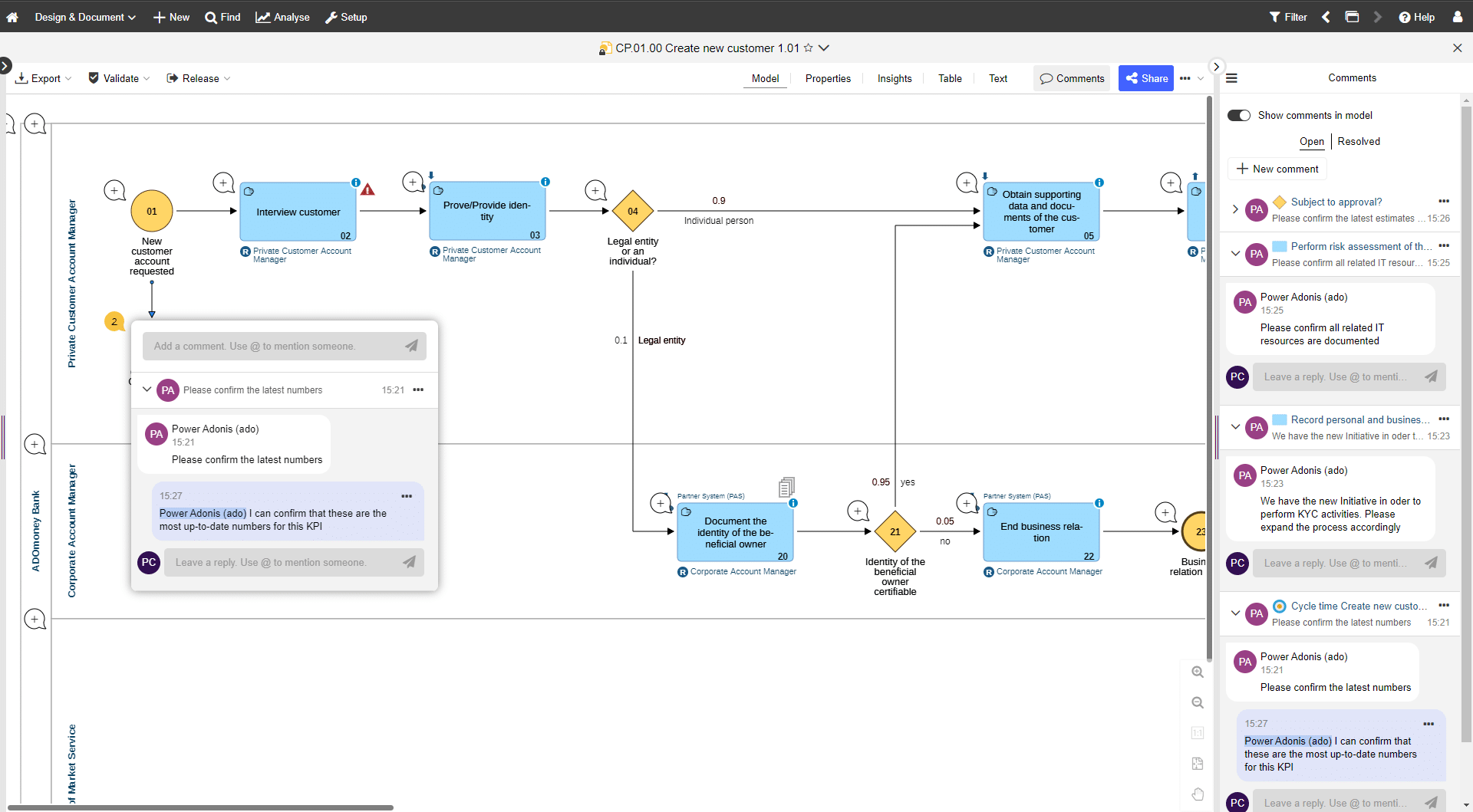
Collaboration Features in the BPM tool ADONIS
3. Map and Analyze Processes
Mapping and analyzing processes is a core BPM activity and a foundation for Operational Excellence. By documenting current processes, organizations gain visibility into how work is actually performed. Process analysis helps identify bottlenecks, redundancies, and deviations, creating a fact-based foundation for targeted improvements.
4. Define and Measure Key Performance Indicators (KPIs)
To manage Operational Excellence effectively, organizations must measure process performance. BPM supports the definition and monitoring of KPIs that reflect efficiency, quality, compliance, and effectiveness. Well-defined KPIs enable organizations to track progress, evaluate improvement initiatives, and make informed decisions based on data rather than assumptions. process performance
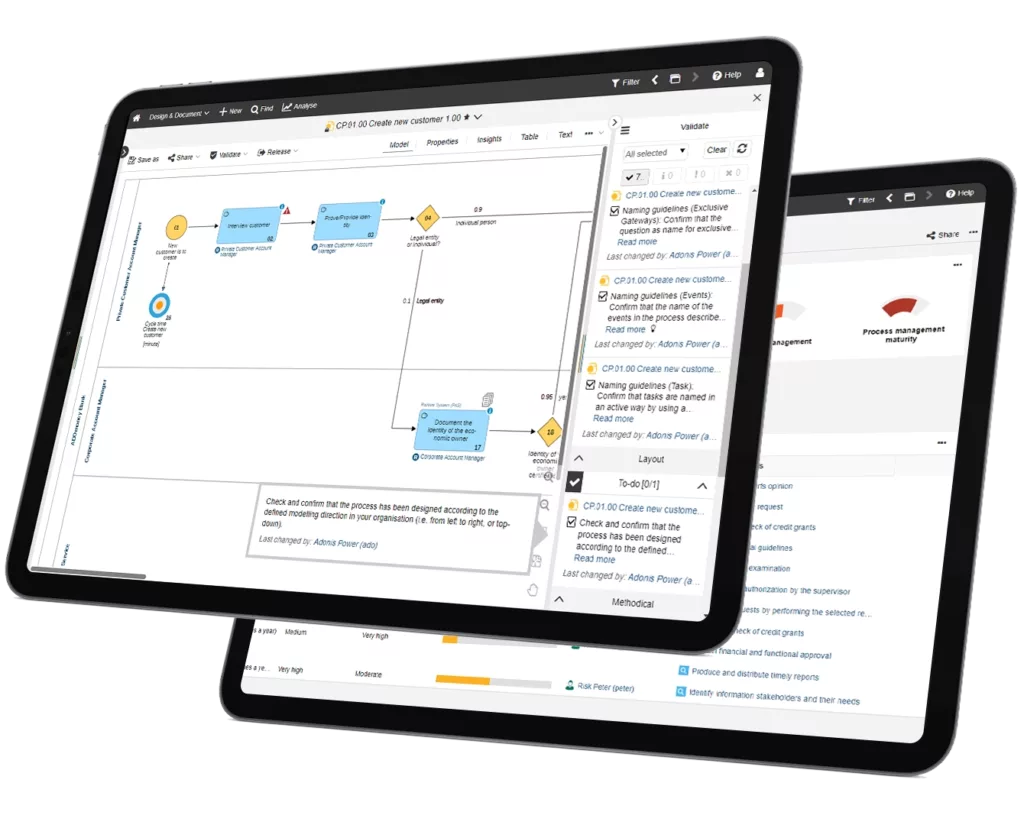
Map and analyse processes with ADONIS
5. Implement Improvements and Standardize Processes
Based on process analysis and performance data, organizations can implement targeted improvements. BPM supports controlled process changes and the standardization of optimized processes across the organization. Standardization ensures consistency, reduces variability, and supports compliance without sacrificing flexibility.
6. Monitor, Learn, and Adapt Continuously
Operational Excellence is not achieved once processes are improved — it is sustained through continuous monitoring and adaptation. BPM enables ongoing feedback by linking process execution with performance insights.
This allows organizations to respond to changes, identify new improvement opportunities, and ensure that excellence is maintained over time.
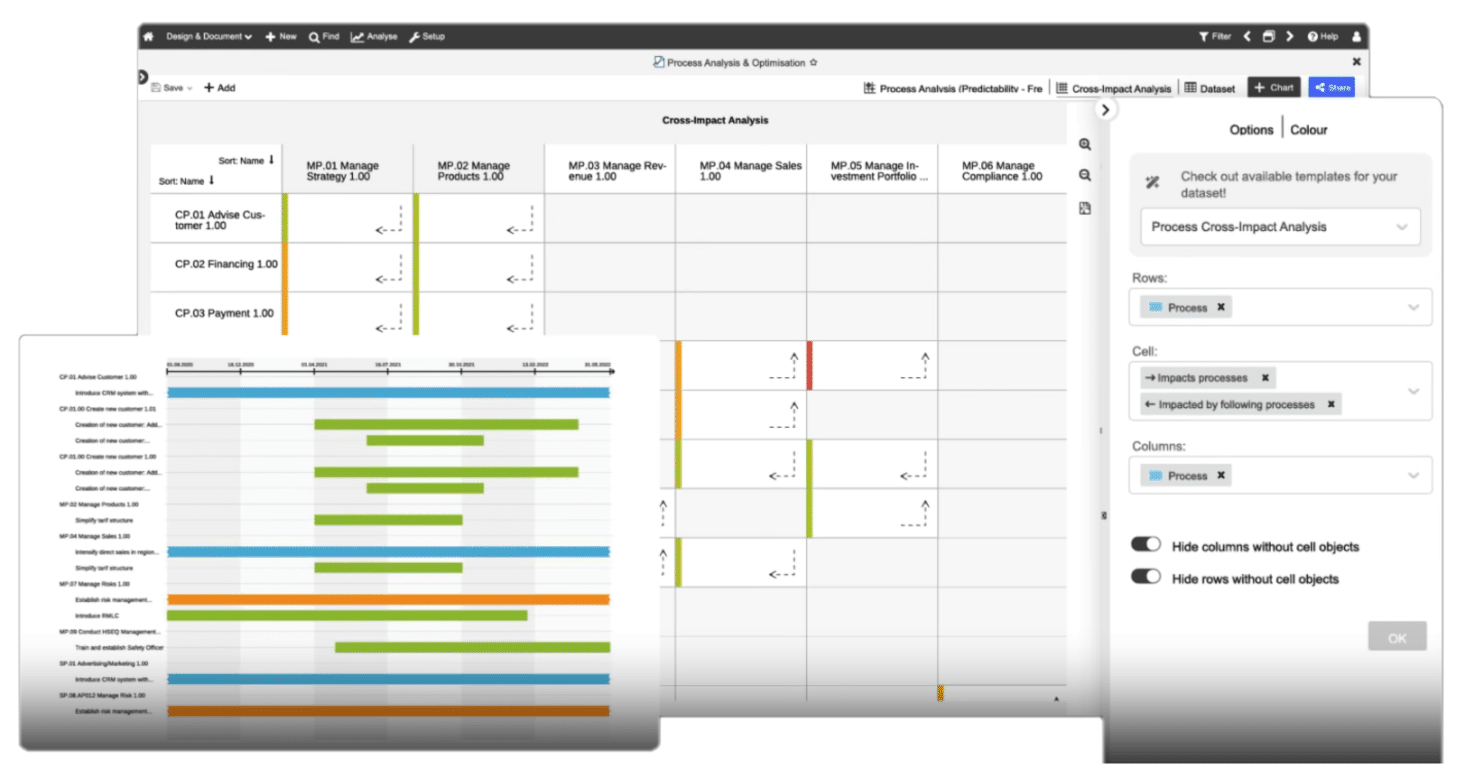
Example of ADONIS analysis capabilities
Using BPM Tools to Support Operational Excellence
BPM tools support Operational Excellence by providing a structured environment for modeling, analysis, execution, and monitoring. They act as enablers that make BPM practices scalable and sustainable across the organization. Rather than driving improvement on their own, BPM tools support consistency, transparency, and governance throughout the Operational Excellence journey.
Applying Operational Excellence with BPM in Practice using ADONIS
Applying Operational Excellence in practice requires consistency, transparency, and governance across the entire process landscape. BPM tools support this by providing a central environment where processes can be designed, analyzed, improved, and monitored in a structured way.
ADONIS BPM Suite supports organizations in operationalizing BPM for Operational Excellence by combining process modeling, documentation, performance insights, and governance capabilities in a single platform. This enables organizations to manage improvements systematically, ensure process consistency, and maintain visibility across operations as they evolve.
Summary
Operational Excellence cannot be achieved through isolated initiatives or tools alone. It requires a structured and continuous approach to managing how work is performed across the organization.
Business Process Management provides this structure by enabling transparency, measurement, and continuous improvement at the process level. By using BPM as a foundation, organizations can systematically achieve and sustain Operational Excellence while remaining adaptable to change.





Already got our weekly updates?