Governance, Risk & Compliance

Found this helpful? Share it with peers.
Introduction
Cybersecurity has become a critical pillar of organizational resilience. As threats grow more sophisticated, traditional safeguards alone are no longer enough to protect key assets, processes, and data — making a structured compliance management system essential for organizations looking to govern their cybersecurity obligations systematically.
The National Institute of Standards and Technology (NIST) Cybersecurity Framework offers a proven, structured approach to managing cyber risks. Its latest version, NIST CSF 2.0, builds on established best practices and expands guidance to help organizations strengthen governance, align security with business objectives, and respond to threats more effectively.
Tools like ADOGRC play a crucial role in putting the NIST CSF 2.0 into practice. By embedding core functions, categories, and subcategories directly into your GRC workflows, ADOGRC helps organizations improve visibility, streamline assessments, and support continuous cybersecurity improvement.
What is the NIST Cybersecurity Framework 2.0?
The NIST CSF 2.0 is a globally adopted framework designed to help organizations identify, assess, and manage cybersecurity risks. Created by the National Institute of Standards and Technology (NIST), it provides a common language and structured approach for improving cybersecurity across industries.
The updated version introduces refinements, expanded guidelines, and improved clarity to support organizations of all maturity levels.
Key aspects of the NIST CSF 2.0
The framework helps organizations:
-
Simplify complex cybersecurity topics with a clear, accessible structure
-
Make informed, risk-based decisions
-
Strengthen prevention, detection, and response capabilities
-
Align cybersecurity efforts with business objectives
-
Protect assets such as applications, processes, and sensitive data
Components and Objectives
The NIST CSF 2.0 is built around six core functions that represent the lifecycle of cybersecurity risk management:
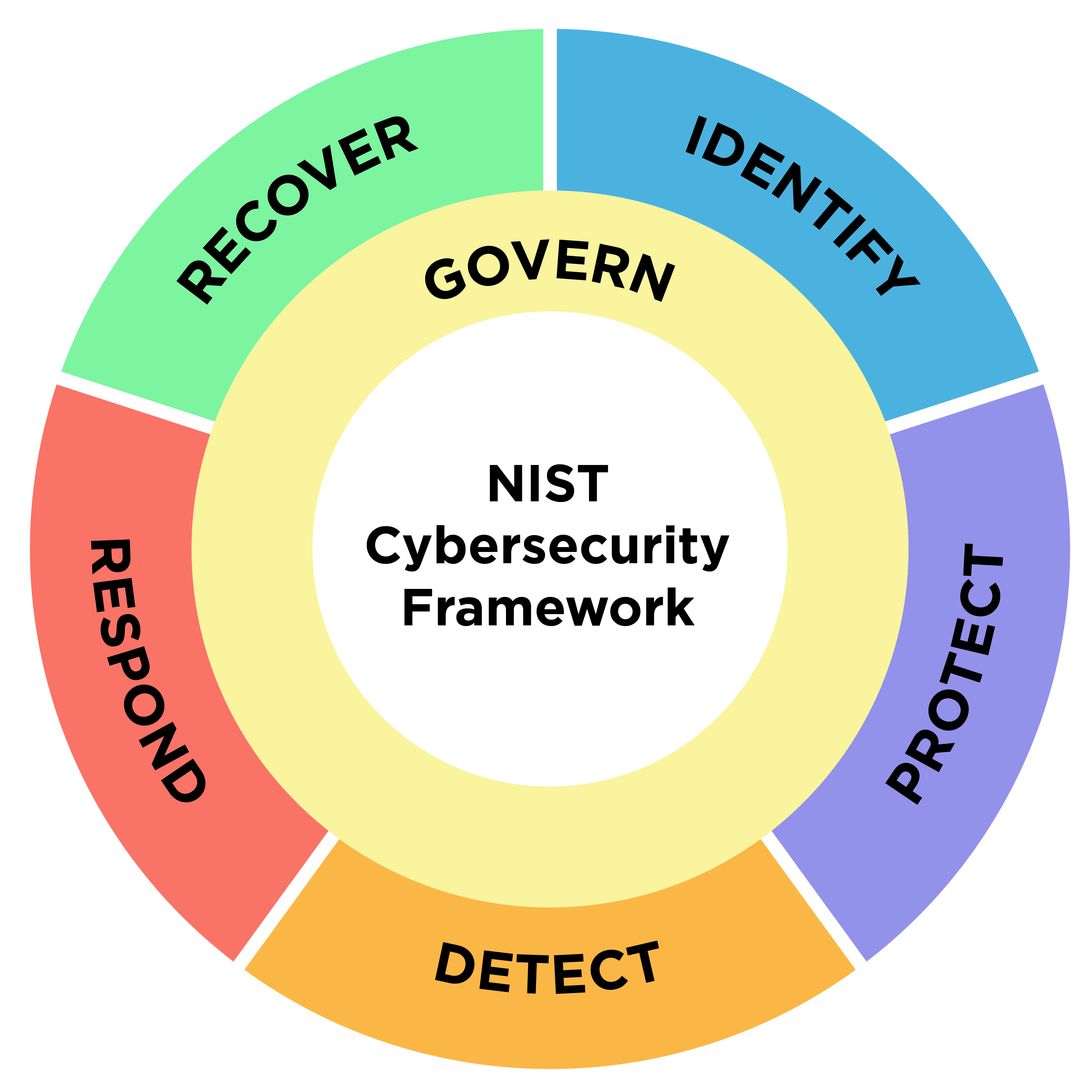
The six core functions of the NIST CSF 2.0 (credit: N. Hanacek/NIST)
Source: https://www.nist.gov/image/nist-cybersecurity-framework-20-draft
Govern:
Define and communicate cybersecurity expectations, policies, and strategic priorities.
Identify:
Understand assets, risks, dependencies, and business context to prioritize cybersecurity activities.
Protect:
Implement safeguards to secure critical assets such as processes, systems, applications, and data.
Detect:
Monitor for anomalies, suspicious activity, and cybersecurity events to ensure rapid visibility.
Respond:
Develop and execute coordinated actions to contain, mitigate, and communicate during an incident.
Recover:
Restore affected capabilities, minimize business impact, and maintain transparent communication.
Each function includes categories and subcategories that outline specific practices, responsibilities, inventories, and communication guidelines — offering actionable direction for implementation.
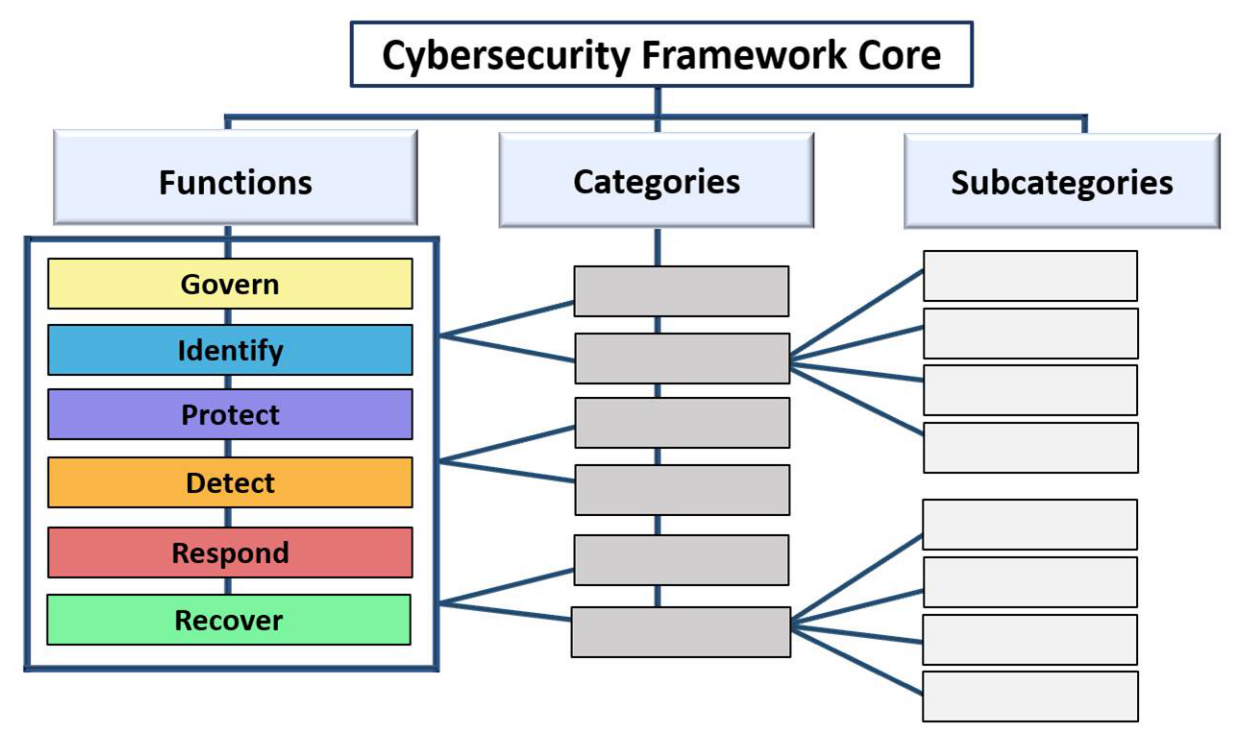
NIST CSF 2.0 Core Structure (credit: cyberframework@nist.gov)
Source: https://nvlpubs.nist.gov/nistpubs/CSWP/NIST.CSWP.29.pdf (Fig. 1., P. 3)
The NIST CSF 2.0 not only integrates well-established cybersecurity practices but also offers guidelines for continuous improvement, adapting to new threats and changes in technology.
Benefits of Implementing NIST CSF 2.0
NIST CSF 2.0 provides a holistic framework for integrating cybersecurity risks into overall business process management. This updated version emphasizes embedding security at every level of operations, helping organizations proactively identify and mitigate risks.
Unified Risk Management
NIST CSF 2.0 aligns cybersecurity with enterprise risk management, enabling a more cohesive strategy for addressing both internal and external threats.
Improved Compliance
The framework simplifies meeting evolving regulatory requirements, ensuring organizations remain compliant with industry standards and legal obligations more efficiently.
Operational Efficiency
By streamlining security processes, it reduces errors, minimizes resource waste, and lowers operational costs, leading to more efficient day-to-day operations.
Enhanced Visibility and Responsiveness
Strengthened monitoring and detection capabilities help organizations quickly identify vulnerabilities and respond to incidents, reducing the potential impact of cyber threats.
Scalability
The framework is adaptable, allowing businesses to scale their cybersecurity measures as they grow or as new risks emerge, ensuring protection remains robust.
Cultivating a Security-First Culture
By embedding cybersecurity as a core business function, NIST CSF 2.0 promotes a culture where security awareness is integral to every employee and decision, fostering long-term resilience.
Proactive Threat Management
The new version enhances capabilities to anticipate, prepare for, and mitigate cybersecurity risks before they materialize, creating a more forward-looking approach to security.
Cybersecurity with ADOGRC in line with NIST CSF 2.0
ADOGRC enables organizations to operationalize the NIST CSF 2.0 through powerful, integrated capabilities:
Seamless Integration of NIST Functions
The framework’s functions, categories, and subcategories are fully embedded in ADOGRC, ensuring consistent execution across processes.
Structured Cybersecurity Assessments
Pre-configured templates aligned with NIST CSF 2.0 help teams perform assessments quickly, accurately, and consistently.
Real-Time Risk Analysis
ADOGRC highlights risks immediately through visual dashboards and graphical risk matrices, including all related assets.
Ready-to-Use Implementation Examples
Pre-built initiative pools provide actionable suggestions that can be customized and deployed instantly.
Clear Governance Support
ADOGRC enables detailed tracking of control objectives, responsibilities, and measures — all aligned with the NIST “Govern” function.
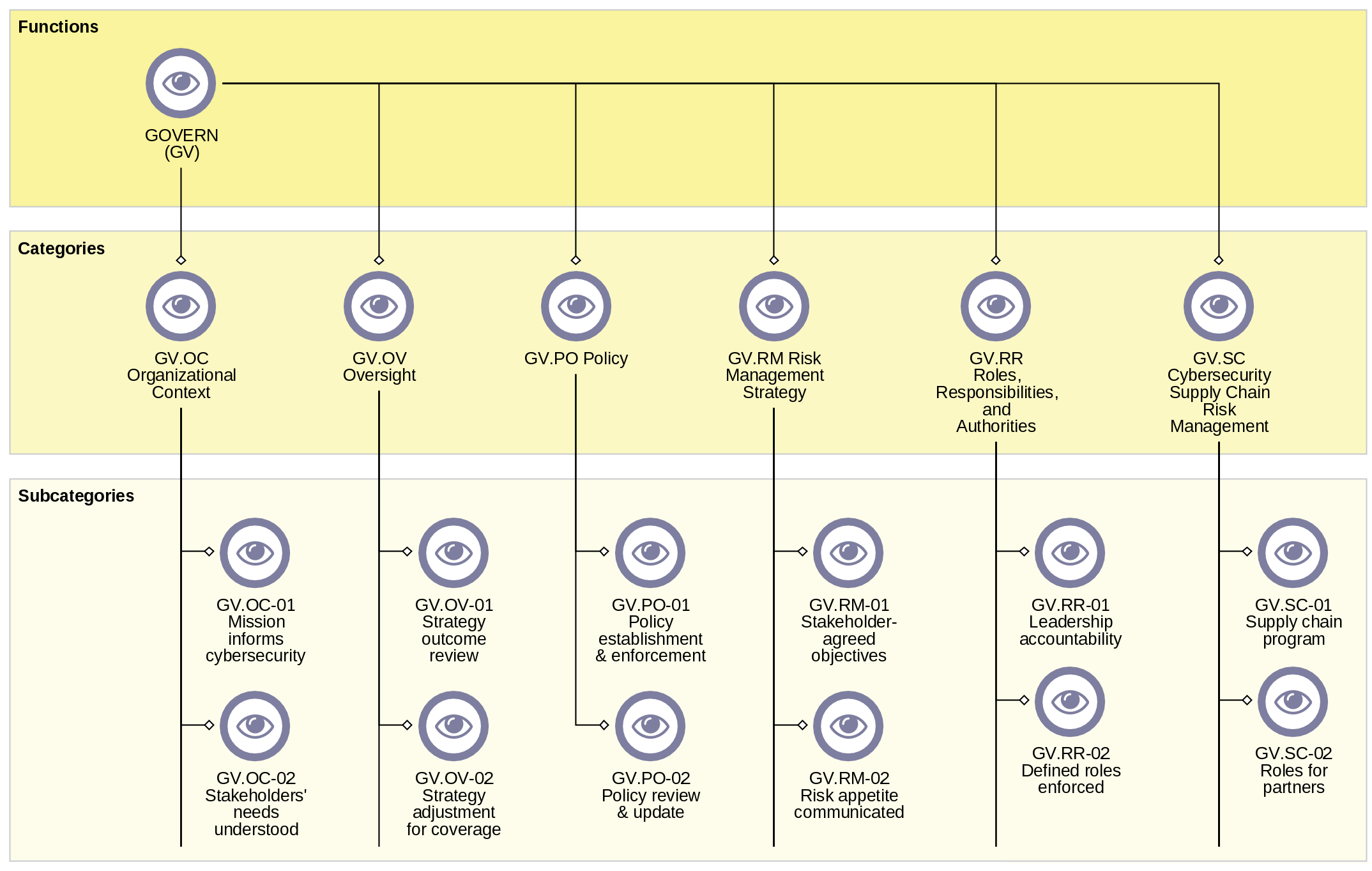
Examples of control objectives in ADOGRC – derived from the NIST CSF 2.0 categories and subcategories of the “Govern” function
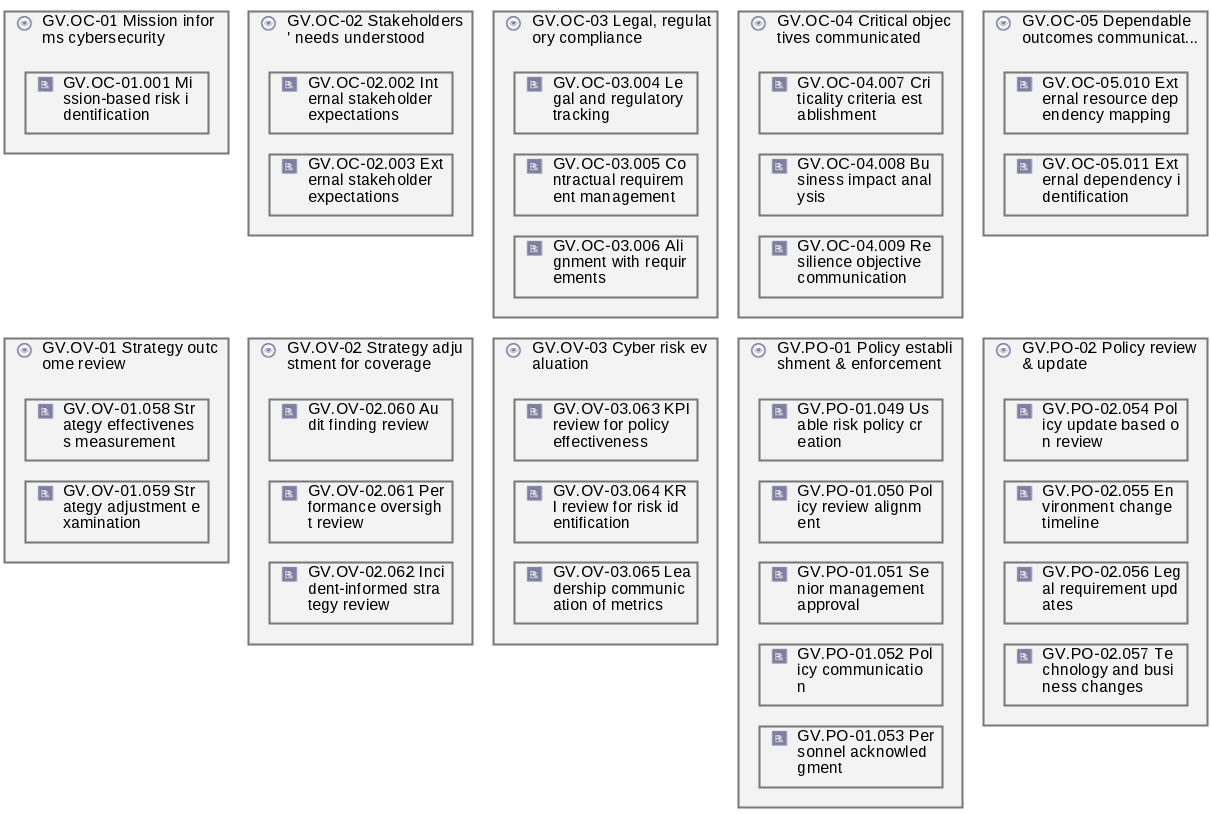
Options for tracking measures in ADOGRC that relate to the function “Govern”
Summary
ADOGRC empowers organizations to implement the NIST CSF 2.0 effectively by providing structured workflows, comprehensive templates, and real-time analytics. The suite supports robust cybersecurity governance, ensures compliance, and strengthens resilience against emerging threats.
By linking risks to processes, systems, and stakeholders, organizations gain actionable clarity and operational efficiency. ADOGRC’s integrated authorization model also ensures sensitive information remains protected at all times.
For companies seeking a scalable, future-proof cybersecurity management approach, ADOGRC + NIST CSF 2.0 provides the foundation needed to meet today’s challenges and prepare for tomorrow.





Already got our weekly updates?