Governance, Risk & Compliance

Found this helpful? Share it with peers.
Introduction
An internal control system (ICS) is one of the most critical foundations of any well-managed organization, protecting assets, ensuring compliance and driving operational performance across every business process.
But implementing an effective ICS is not just about having the right policies in place. It requires a structured approach that connects controls to processes, assigns clear ownership and adapts continuously to a changing business environment.
In this guide, we cover everything you need to know, from what an internal control system is and how it works, to the different types of controls and how to make them work for your organization.
What is an internal control system?
An internal control system (ICS) is a formal framework of policies, procedures and controls that helps organizations achieve their objectives, protect their assets and ensure compliance with laws and regulations.
In practice, it provides the structure that keeps business processes running efficiently, reduces the risk of fraud and mismanagement, and gives leadership the visibility needed to make informed decisions.
What are internal controls?
Internal controls refer to all mechanisms and activities that are designed to help a company operate efficiently and effectively. These typically include specifications, guidelines, rules, management declarations, and more.
Different types of internal controls
Internal controls can be divided into two sub-categories – depending on the effectiveness and possibilities in each specific context.
Preventive controls
Preventive controls play an important part in an ICS because they help prevent errors or irregularities from occurring in the first place. These controls are put into effect to proactively address potential risks and issues, rather than just reacting to them after they have already happened.
Some common examples of preventive controls include:
1-Segregation of duties:
This involves dividing tasks and responsibilities among different individuals within an organization to prevent a single person from having too much control over a particular process. Such a split can help prevent errors or fraud, because it makes it more difficult for one person to manipulate the system without being detected.
2-Authorization and approval processes:
This involves setting up rules and procedures for how transactions and other business activities are authorized and approved. The measure ensures that only authorized individuals can make decisions and take actions on behalf of the organization.
3-Physical controls:
Physical controls prevent unauthorized access to assets or information. This can include things such as locks, security cameras, and other measures to protect the organization’s premises and assets.
4-Information technology controls:
These are controls that focus on preventing errors or irregularities in the organization’s IT systems. Typical examples might be password policies, data backup and recovery procedures, and any other measures to protect the organization’s IT infrastructure.
Hint: Weigh the advantages and disadvantages of an internal control system to make an informed decision.
Detective controls
Detective controls are initiated after any activity in order to identify errors, fraud, and other irregularities within an organization. These controls typically involve the use of various monitoring and reporting tools to discover potential issues, such as discrepancies in financial records or deviations from established policies and procedures.
Four examples of detective controls include:
1-Auditing:
Regular audits are used to review an organization’s financial records and transactions to identify errors or inconsistencies.
2-Fraud detection systems:
Internal or external fraud detection systems can be used to monitor transactions and identify potential instances of fraud.
3-Security monitoring:
Tools such as intrusion detection systems and security cameras can be used to monitor an organization’s physical premises and detect potential security breaches.
4-Exception reporting:
Automated reports that flag deviations from established policies and procedures can help to identify potential issues and areas for improvement.

Why is an internal control system important?
An internal control system is a vital component of any company’s long-term success, as it not only protects the company’s assets from illegal or unauthorized access, but also ensures the accuracy and reliability of financial information.
For many organizations, ICS is not optional. Financial institutions, public accounting firms and government agencies are strictly required to have one. And with increasing regulatory pressure from frameworks like SOX, CSRD and ISO standards, more organizations across all sectors are making ICS a core governance priority.
Beyond compliance, a well-implemented internal control system enables better decision-making, reduces fraud risk and drives operational efficiency, making it an indispensable asset for any organization serious about sustainable performance.

The main tasks and goals of an internal control system
An internal control system is a valuable tool for businesses of all sizes. Ensuring smooth operation of internal processes and preventing corruption should be of high importance to every organization. Thus, the main tasks and objectives of an ICS can be broken down into four main categories: asset protection, documentation, improvement and compliance.
Here’s how it works:
Asset Protection:
ICS helps to safeguard businesses against losses by providing visibility into existing assets. This allows the company to quickly identify any potential risks and take action to prevent losses.
Documentation:
ICS helps to ensure that all processes are recorded accurately and in a timely manner. This helps to ensure that all parties involved are aware of any changes and that the records are up-to-date.
Improvement:
With the help of ICS, businesses can easily identify areas of improvement and make necessary changes. By having access to all the records, businesses can quickly identify any discrepancies and take corrective action.
Compliance:
ICS helps to ensure that all parties involved are following regulations and guidelines. This helps to reduce the risk of non-compliance, which can lead to costly fines and penalties.
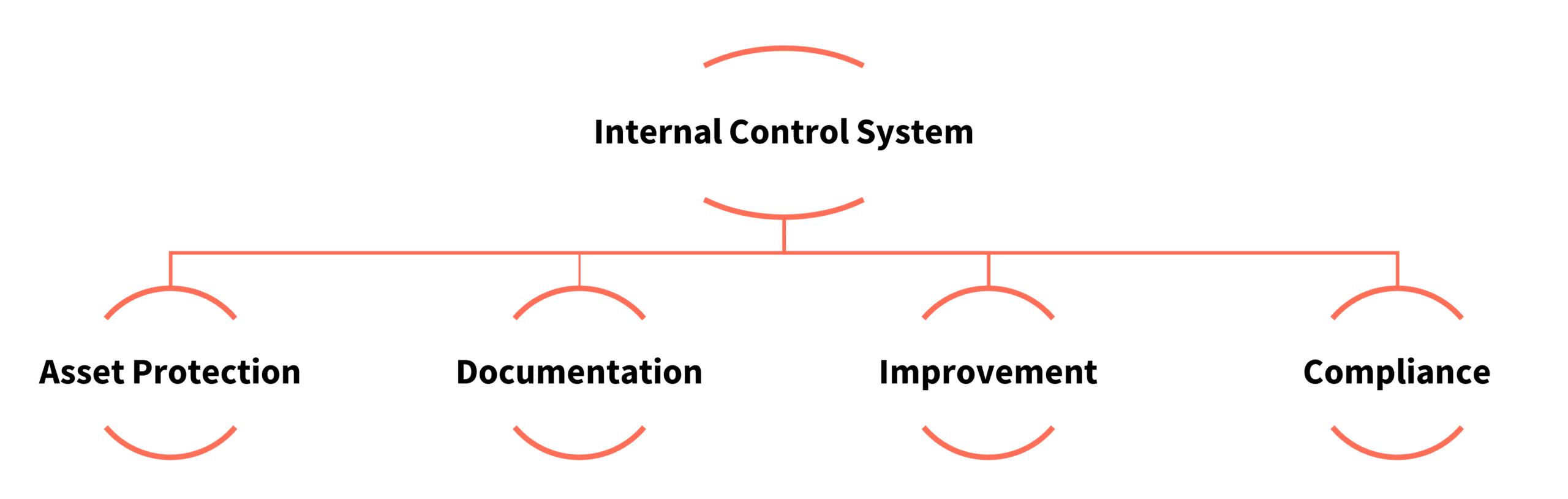
Main tasks and goals of an internal control system
Benefits of an internal control system
Investing in a well-designed internal control system delivers measurable value across the entire organization.
Operational efficiency
A structured ICS streamlines processes, eliminates redundancies and reduces operational friction. The result is a leaner, more productive organization that does more with less.
Asset protection and fraud prevention
By establishing clear controls over access, authorization and financial transactions, an ICS significantly reduces the risk of fraud, asset loss and mismanagement before they become costly problems.
Regulatory compliance
An effective ICS ensures that your organization consistently meets its legal and regulatory obligations, reducing the risk of fines, penalties and reputational damage.
Better decision-making
With accurate, reliable data flowing through controlled processes, leadership teams gain the visibility they need to make informed strategic decisions with confidence.
Early problem identification
Controls act as an early warning system, surfacing discrepancies, deviations and risks before they escalate into serious operational or financial issues.
Challenges of an internal control system
Due to the complexity of different moving parts in your organization, implementing an effective internal control system is not always an easy task. It can be challenging to identify the potential risks and develop strategies to mitigate them, as well as ensure that all employees are aware and follow the procedures put in place by the ICS.
Another obstacle for a successful ICS operation is the ever-changing business environment. As technology evolves, it becomes necessary to update and modify your internal controls accordingly.
Nevertheless, this is where an internal control system software comes in to save the day. Supporting your ICS initiatives with a suitable tool, makes any challenges significantly easier and the implementation of proper measures much more efficient. If you’re wondering how to select the most fitting tool for your business, be sure to check out our blog post to check out our blog post on internal control system software.
How ADOGRC Supports Your Internal Control System
Managing an internal control system manually through spreadsheets, disconnected tools and siloed departments creates gaps in visibility, accountability and compliance. Organizations need a systematic approach that connects controls to processes, assigns clear ownership and enables continuous monitoring in a single integrated environment.
This is where ADOGRC makes the difference.
Process-based control management
ADOGRC uses your process map as the foundation for control assignment, ensuring every control is anchored to a specific process, with a defined owner and clear documentation requirements.
Preventive and detective control workflows
Both preventive and detective controls can be managed directly within ADOGRC with automated workflows, email notifications and audit-compliant versioning built in.
Real-time monitoring and reporting
Risk matrices, control dashboards and exception reports give leadership immediate visibility into control status across the entire organization — at any point in time.
Integrated GRC
ADOGRC connects your ICS with risk management, compliance and sustainability management, enabling a truly integrated GRC system built on the 3 Lines Model.
Summary
An internal control system is a strategic asset that protects your organization, drives operational efficiency and gives leadership the visibility needed to make informed decisions.
The key elements of an effective ICS:
- A clear framework of preventive and detective controls anchored to your business processes
- Defined ownership and documentation requirements at every level
- Continuous monitoring, regular control tests and management reviews
- Full integration with your broader GRC framework — risk, compliance and sustainability
Ready to build a stronger internal control system? Explore how ADOGRC by BOC Group can support your ICS journey from day one.




Already got our weekly updates?