Enterprise ArchitEcture

Found this helpful? Share it with peers.
Introduction
Enterprise Architecture (EA) has a branding problem. In most companies, it’s seen as a slow, academic exercise that produces massive diagrams nobody actually looks at. When you bring ArchiMate into the mix, that feeling of being overwhelmed usually gets worse. The language is incredibly deep, but that depth is exactly what makes it feel impossible to start.
ArchiMate is undeniably powerful, but it carries a significant burden: it contains an immense number of elements, complex relationship rules, and near-limitless possibilities. The core challenge here is not whether ArchiMate provides value, because it clearly does. The real hurdle is how to take a tool designed for global complexity and make it functional and approachable from the very first day.
Lean Enterprise Architecture: A Better Starting Point
There is a persistent myth that “Lean EA” means doing sloppy work or skipping documentation. In reality, it means being ruthless about where you spend your time.
Most EA projects fail because they try to do too much too early. They end up with a graveyard of objects and connections that don’t help anyone. A lean strategy moves in a different direction. Instead of trying to model your entire organization upfront, a lean approach asks:
- Who actually needs Enterprise Architecture?
- What decisions are they trying to make?
- What information would already help them today?
This allows you to start small and deliver value early. You might begin by supporting one team with one specific decision. Once that works, you add more detail, cover more domains, and bring in more stakeholders, step by step, as your organization’s EA maturity grows. There is no pressure to model everything upfront. The scope expands when it makes sense, not according to a plan made before anyone knew what was actually useful.
Hint: The Lean approach makes EA more accessible to everyone in your organization. See how ADOIT Workspaces makes EA even more collaborative.
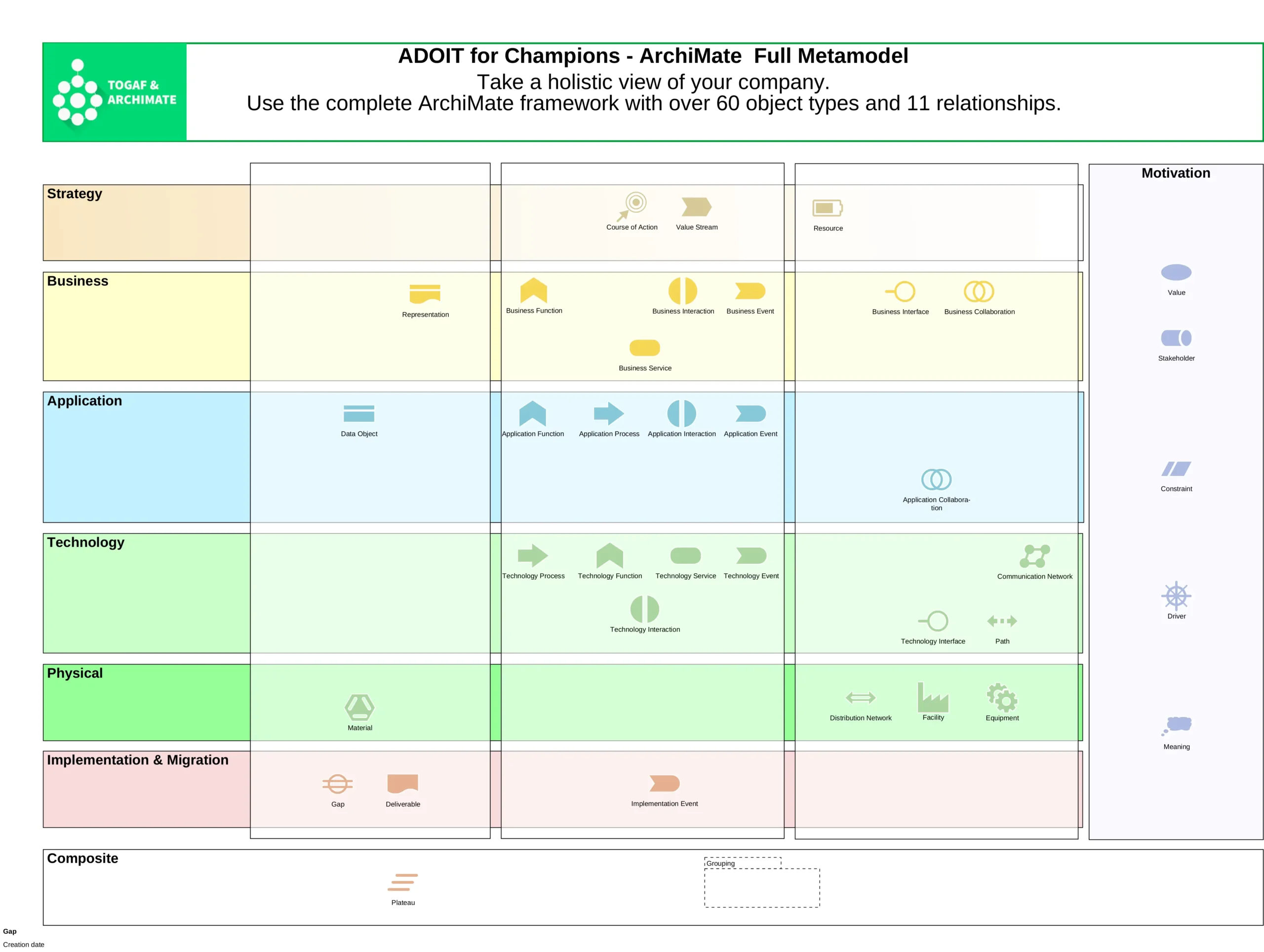
Full ArchiMate MetaModel – Advanced/Champion Level
Stripping Down the Metamodel
ArchiMate is one of the best tools for linking business processes to IT infrastructure, but you shouldn’t use the whole thing at once. When a team sees the full framework, they usually freeze.
The fix is to start with a “Lean Metamodel“. You are still using ArchiMate, so there is no need to switch tools or relearn concepts later. You simply start with a subset of the standard and expand it over time. The learning curve is shallower, but you are never painting yourself into a corner.
-
Fewer object types: Stick to the basics like Applications and Business Processes.
-
Fewer relationships: Don’t worry about every nuanced connection type yet.
-
A clearer structure: Keep the diagrams simple enough for a non-architect to read.
Think of it as “Simple enough to start. Powerful enough to grow“.
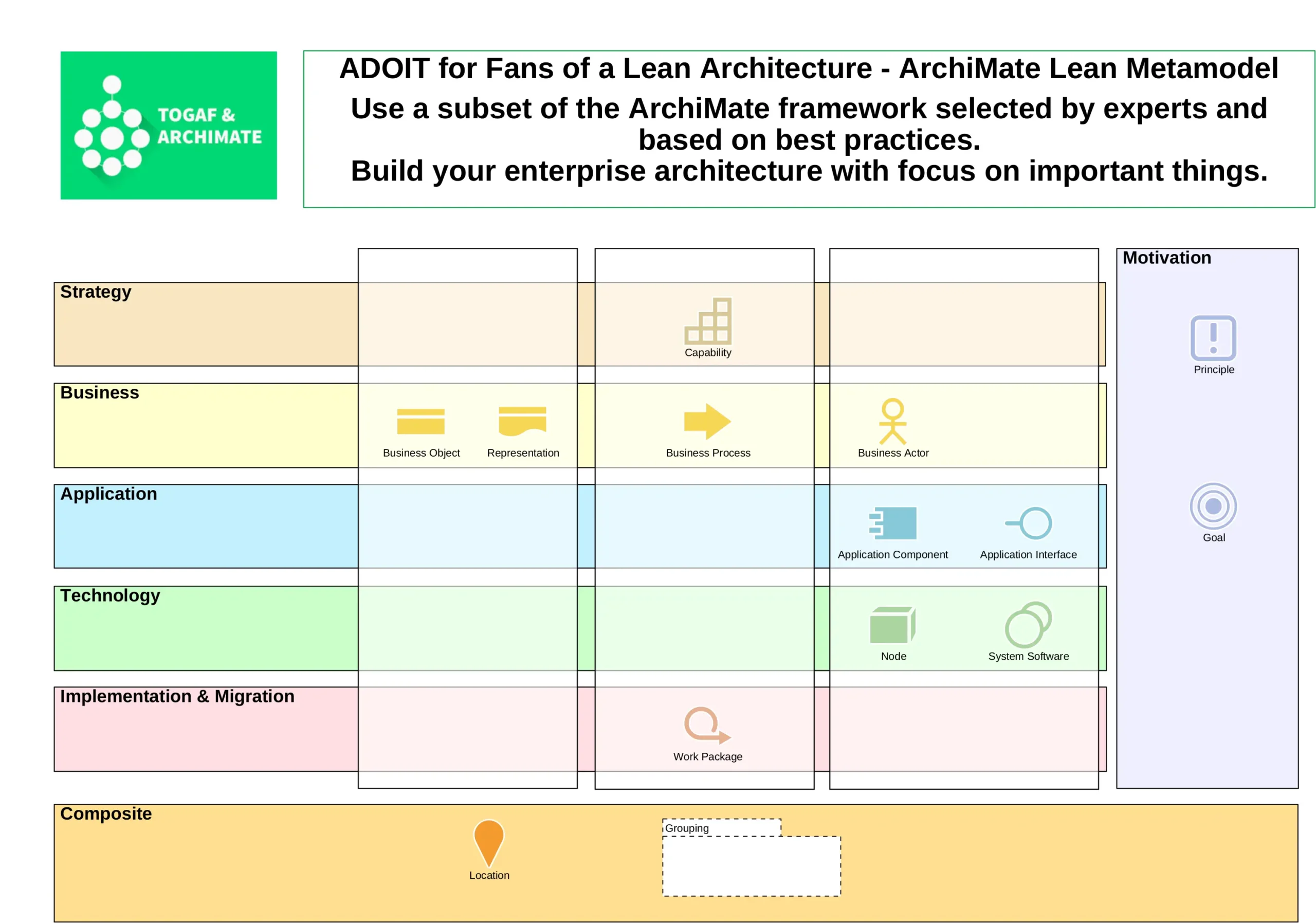
ArchiMate MetaModel – Early Stage (Lean & Beginner Friendly)
From Modeling to Decision Support
The real value of EA comes when a simple model can answer a messy question. If you can show exactly which applications are connected to a specific data set, you’ve moved from “drawing diagrams” to “supporting the business.”
This is how you get buy-in. You don’t get it by having the most complete model; you get it by having the most useful one.
Hint: Struggling to get a buy-in for your EA projects? See how EA connects to real business problems & needs and provide a practical solution to your stakeholders.
Solving One Problem at a Time
Another way to make ArchiMate more approachable is to focus on specific use cases that matter to your organization. Instead of a “top-down” approach, start with the problems that keep people awake at night.
Application Portfolio Management:
Identifying exactly what software you own, who is using it, and what it costs.
Capability Portfolio Management:
Mapping what the business does against the technology that supports it to see where you are underserved.
Understanding what data sets exist, where they are mastered, and how they flow between systems.
Technology Portfolio Management:
Tracking the underlying infrastructure and lifecycles to avoid running your business on obsolete hardware or software.
Transformation Initiatives:
Mapping out the “As-Is” and “To-Be” states so everyone understands exactly what happens during a migration or a major shift in strategy.
Each of these portfolios provides a “win” for a different stakeholder. Over time, these focused areas naturally connect to form a larger, more mature architecture landscape.
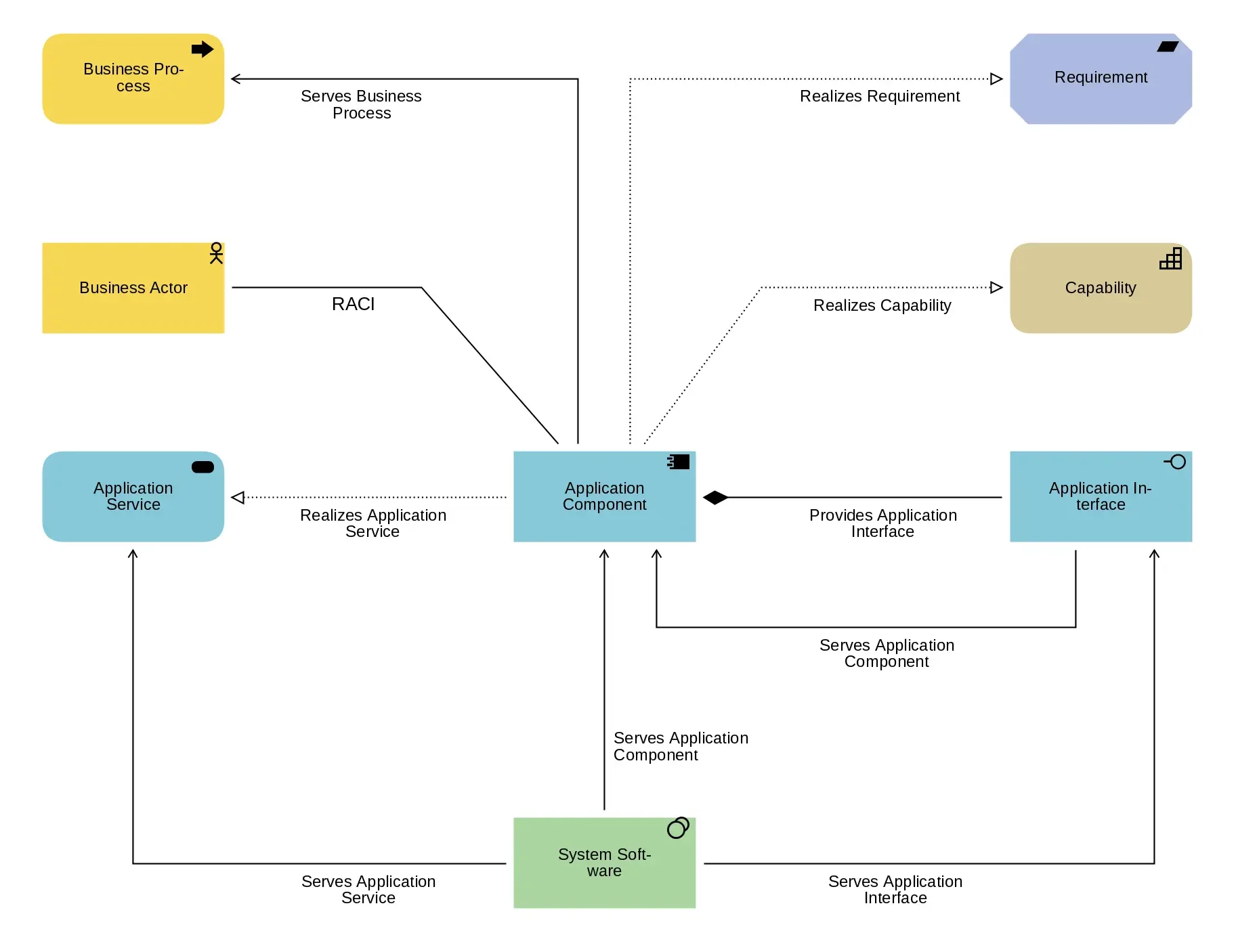
APM MetaModel – Focused View for Application Portfolio Management
Growing into Maturity
A lean start isn’t a dead end. As your team gets more comfortable, you can start adding the more complex parts of ArchiMate. You might bring in the Strategy layer or start using more advanced viewpoints.
The difference is that you’re building on a foundation that people are already using. You aren’t forcing a heavy framework on an organization that isn’t ready for it. You’re starting small, staying useful, and growing with a purpose. That is how ArchiMate becomes a practical tool instead of a burden.
Want to see this in practice?




Already got our weekly updates?